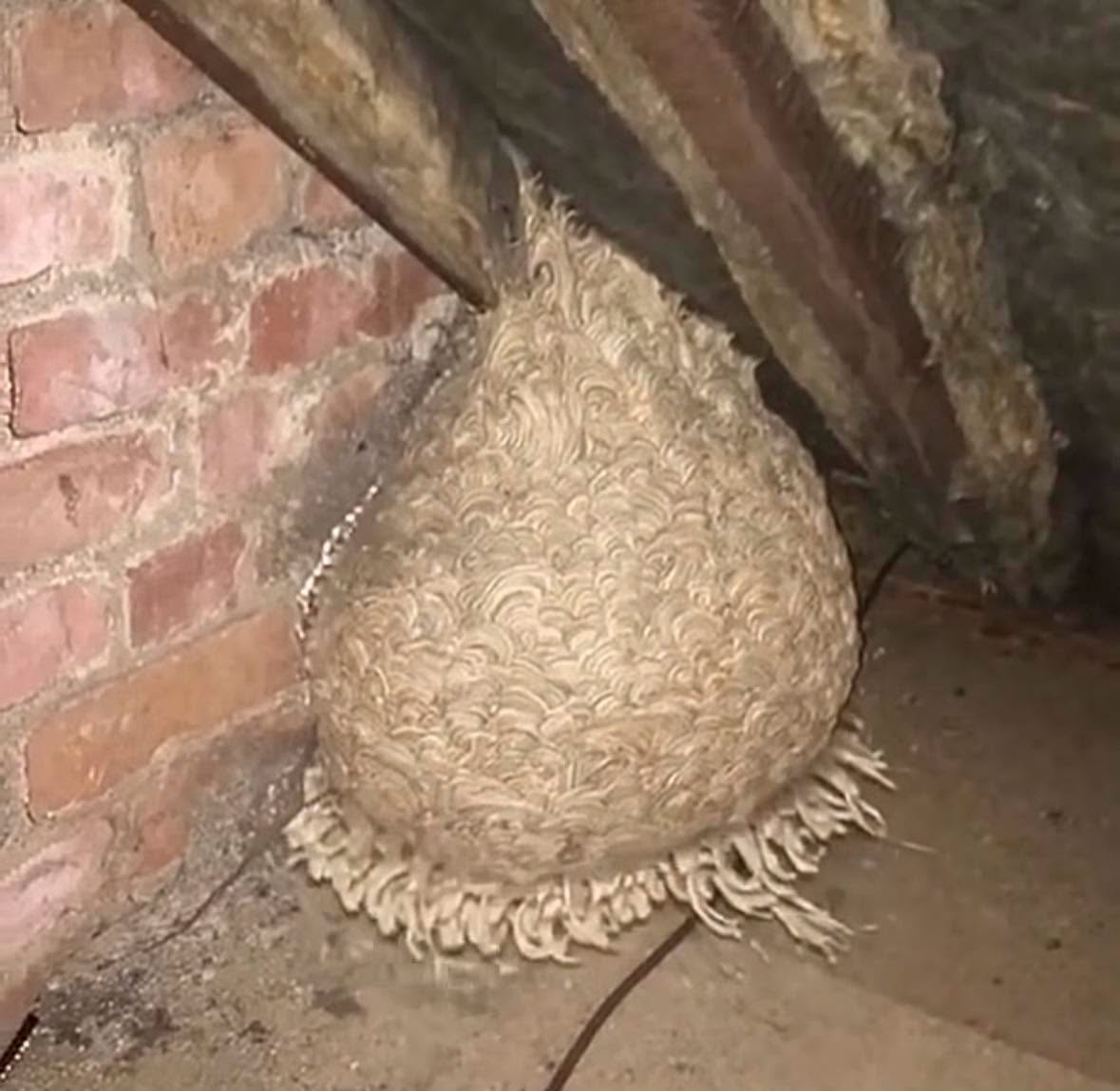
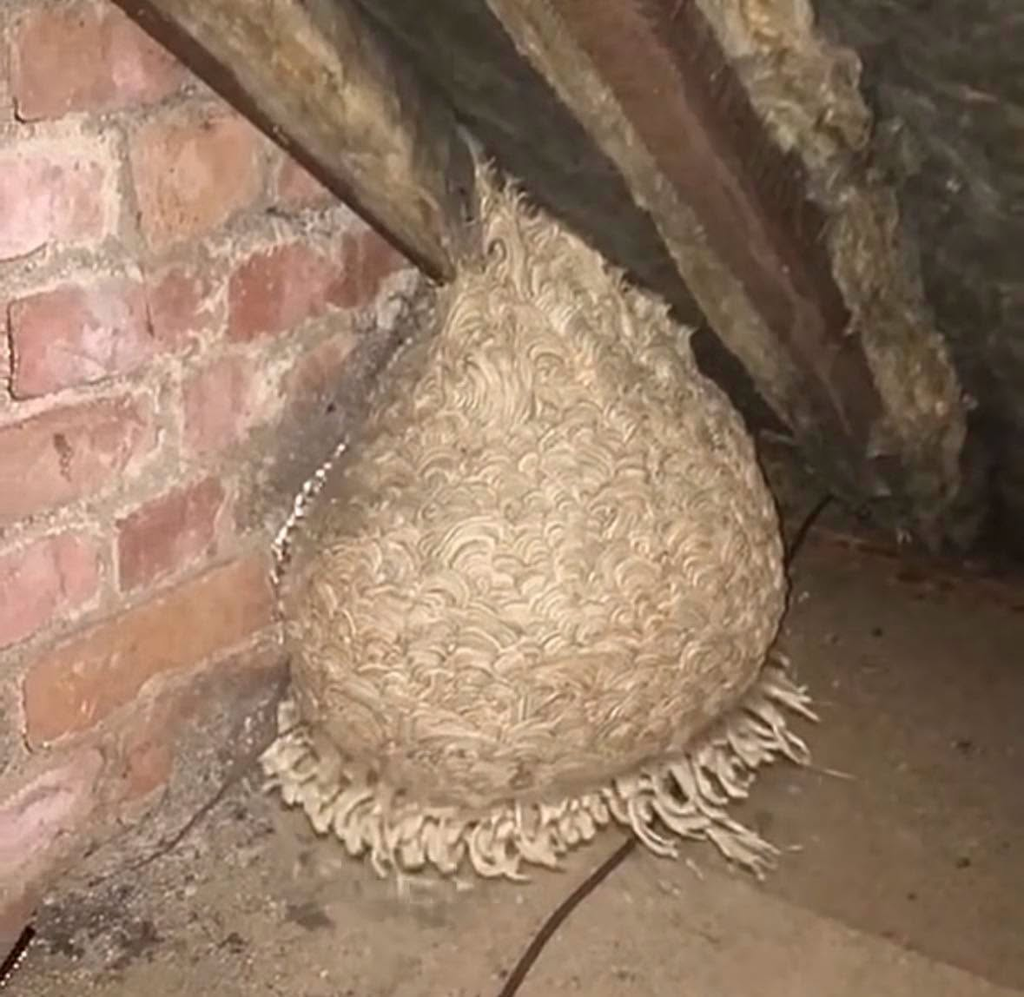
At first glance, the enormous structure tucked beneath the wooden beams looks like something straight out of a nightmare. Its rounded shape, intricate swirling patterns, and papery surface make it resemble a giant hornets’ nest. But what exactly is hiding inside?
Discoveries like this can be startling, especially when they happen in a quiet attic, an old barn, or an unused storage space. A structure that appears harmless from a distance may be home to thousands of stinging insects.
What Is That Huge Structure?
The object in the photograph strongly resembles a large paper-wasp or hornet nest. These social insects build nests from plant fibers mixed with saliva, creating a paper-like material with distinctive layered patterns.
Unlike honeybee hives, which contain wax combs, many wasp and hornet nests are made from paper-like pulp. Depending on the species, a nest may develop into a rounded structure with several layers surrounding the colony’s brood chambers.
The nest’s size can vary considerably depending on the species, the age of the colony, and local environmental conditions.
However, the photograph alone cannot confirm the exact insect species or whether the nest is currently occupied. The pale, curled material around its base is also not enough to determine what is inside.
Why Would Hornets Build a Nest in an Attic?
Attics and roof spaces can provide several advantages for social wasps and hornets:
- Shelter: Roof beams and enclosed spaces protect nests from rain and wind.
- Limited disturbance: An unused attic may remain undisturbed for long periods.
- Suitable attachment points: Wooden beams and roof structures offer surfaces where nests can be secured.
- Protection for the colony: A sheltered location can help protect developing larvae.
A colony may go unnoticed for weeks or months if nobody regularly enters the space.
What Happens If Someone Disturbs the Nest?
The main concern is the possibility of defensive stings. Some social wasps and hornets can become aggressive when they perceive a threat to their colony. Multiple insects may defend a nest at once, making close inspection dangerous.
If you discover a structure like this in your home:
- Keep your distance and avoid touching it.
- Do not shine objects into openings or attempt to shake the structure.
- Keep children and pets away from the area.
- Avoid spraying household insecticides into a large nest.
- Contact a qualified pest-control professional for an assessment and safe removal if necessary.
Anyone with a known severe allergy to insect stings should take particular care. Difficulty breathing, swelling of the tongue or throat, or faintness after a sting requires emergency medical assistance.
Is It Really a Hornets’ Nest?
The layered, papery appearance is consistent with a social wasp or hornet nest, but a reliable identification would require more information, such as the location, the structure’s texture, and whether insects are entering or leaving it.
Viral photographs can also be presented with dramatic captions that do not establish the actual circumstances of the discovery. It is best not to assume that the nest contains a particular species—or that it is occupied—without confirmation.
What Would You Do If You Found This in Your Attic?
A large nest hidden among roof beams would certainly be an unsettling surprise. Yet the safest response is not panic or curiosity-driven inspection; it is to keep away and let a professional determine what it is.
Have you ever discovered a wasp or hornet nest in an attic, shed, or garage? Share your experience in the comments, especially if you know which species built it.