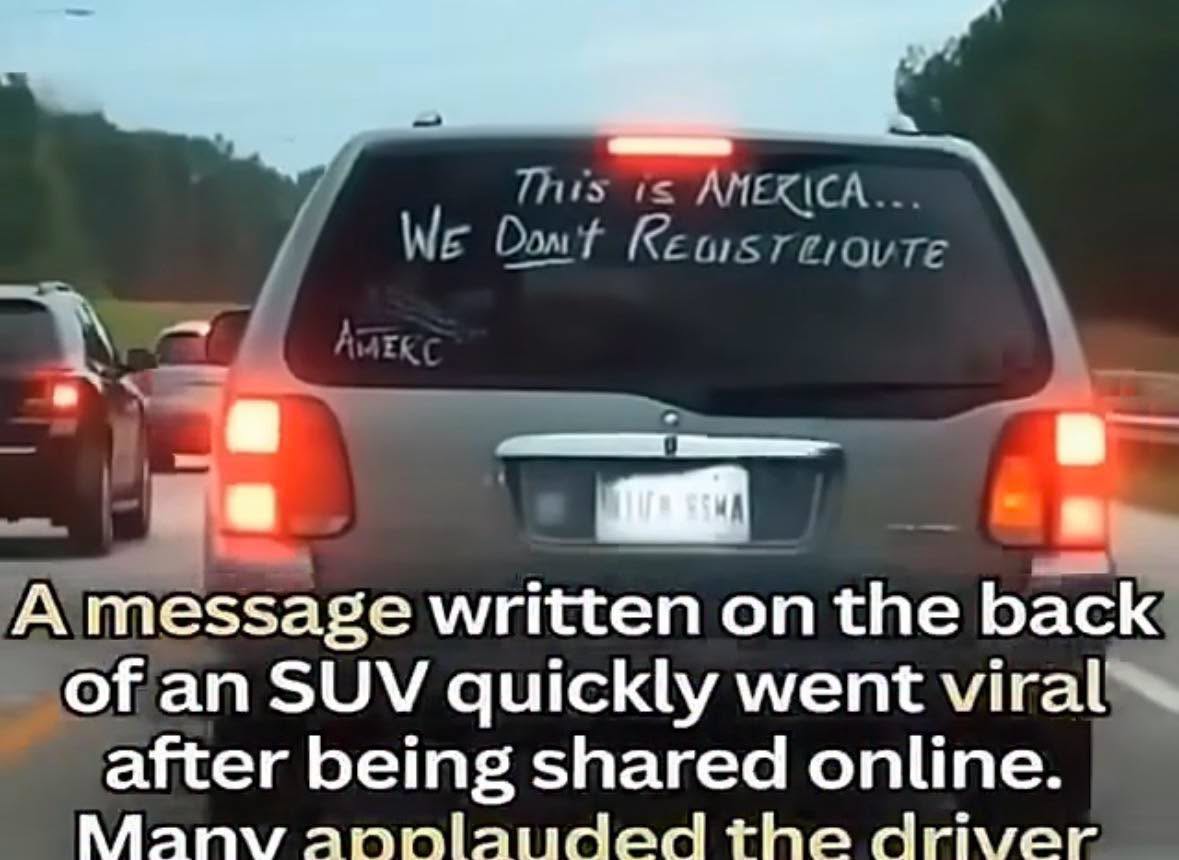
Sometimes, a few words written on the back of a vehicle can spark a much bigger conversation. That is exactly what happened when a photograph of an SUV displaying a political message circulated online, drawing attention to questions about hard work, government assistance, taxes, and economic fairness.
The message was reportedly shared on Reddit by someone who spotted the vehicle while driving. It quickly attracted attention from people who agreed with the driver’s viewpoint, as well as those who believed the slogan oversimplified a complicated issue.
What Did the Message Say?
Reports about the original photograph transcribed the message as:
“This is America… we don’t redistribute wealth… we earn it!”
The statement expresses a belief that people should be rewarded for their work and personal achievements rather than relying on government redistribution of wealth.
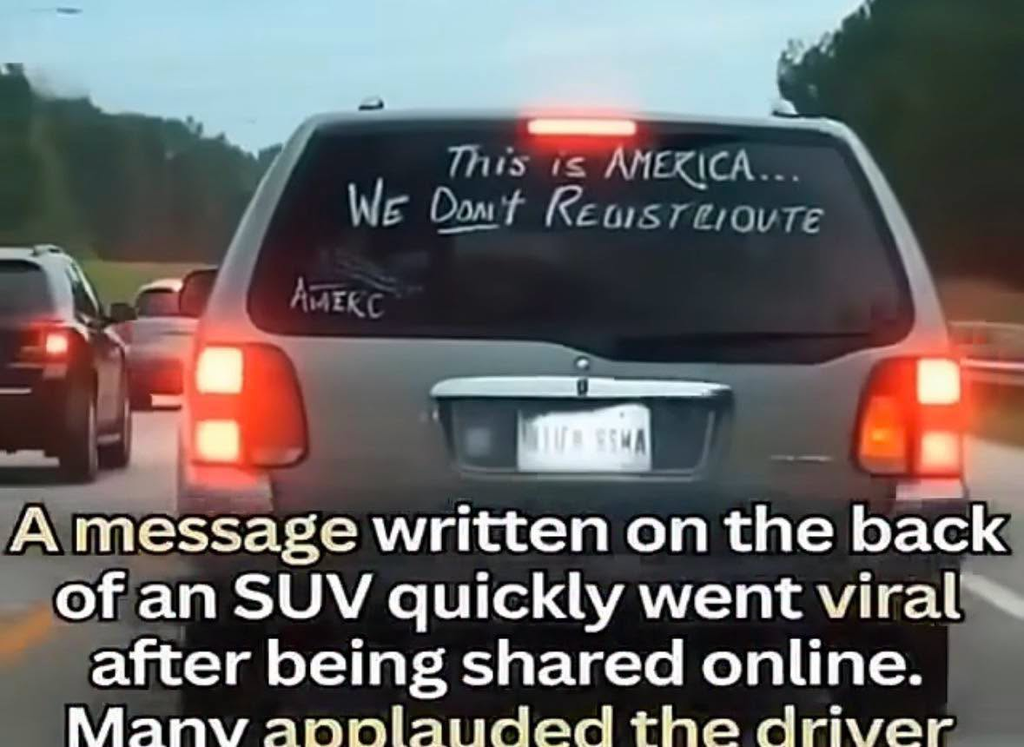
The photograph supplied with this post appears to show the same general message, although several words are difficult to read clearly. The exact wording is reported in coverage of the earlier online discussion.
Why Did Some People Agree With the Driver?
For supporters, the message represents personal responsibility, independence, and the belief that hard work should lead to financial success.
People who share this perspective often argue that individuals should have the opportunity to keep more of what they earn and make their own financial decisions. They may also worry that poorly designed assistance programs can discourage employment or create long-term dependence.
From this point of view, the slogan is a reminder that effort, skills, and determination matter.
Why Did Others Disagree?
Critics see the issue differently. They argue that the slogan presents a complex economic debate as if it had only two sides: earning money and receiving help.
In reality, most modern economies combine private earnings with taxation and publicly funded services. Roads, schools, emergency services, public infrastructure, and certain social support programs are funded collectively.
Critics also point out that people can experience unemployment, illness, disability, or other circumstances that make financial independence difficult, even when they are willing to work.
For them, government assistance is not necessarily a rejection of personal responsibility. It can also serve as temporary support or a safety net during difficult periods.
What Does Wealth Redistribution Actually Mean?
Wealth redistribution generally refers to policies or mechanisms that change how income or resources are distributed across society. Examples can include progressive taxation, public benefits, pensions, and assistance for eligible households.
Supporters argue that these policies can reduce hardship and expand access to essential services. Opponents may argue that excessive taxation or poorly designed programs can weaken incentives to work, invest, or build businesses.
The real-world effects depend on the specific policy, how it is funded, who qualifies, and how effectively it is administered. The debate cannot be settled by a slogan alone.
Why Do Simple Messages Go Viral?
A short message can communicate a strong opinion immediately. It can also encourage people to identify with a particular viewpoint, share the photograph, and argue about what the words mean.
Social media often amplifies content that provokes strong reactions. As a result, a photograph of an ordinary vehicle can become the starting point for a much wider discussion about national identity, economic opportunity, and fairness.
However, online attention does not necessarily mean that everyone agrees with the message. People may share a post because they support it, oppose it, or simply find it interesting.
The Bigger Question: What Makes a Fair Society?
The debate ultimately comes down to a difficult question: How should a society balance personal responsibility with collective support?
Some people prioritize individual freedom and believe that people should retain as much of their earnings as possible. Others emphasize the importance of social safety nets and believe that public support can help people overcome circumstances beyond their control.
Many people hold a combination of these views. They may value hard work while also supporting limited assistance for people who genuinely need it.
A productive discussion recognizes that economic fairness involves both individual choices and broader social conditions.
Final Thoughts
The SUV message captured a strong opinion about work, wealth, and government assistance. Its popularity illustrates how a short statement can trigger a much larger conversation about the values people want their society to reflect.
Whether you agree with the driver or not, the important questions go beyond the words on a car window: How should success be rewarded? What responsibilities do individuals have? And what support should a society provide to those facing hardship?
What do you think? Should people keep more of what they earn, or should governments do more to support those who need help? Share your opinion respectfully in the comments.