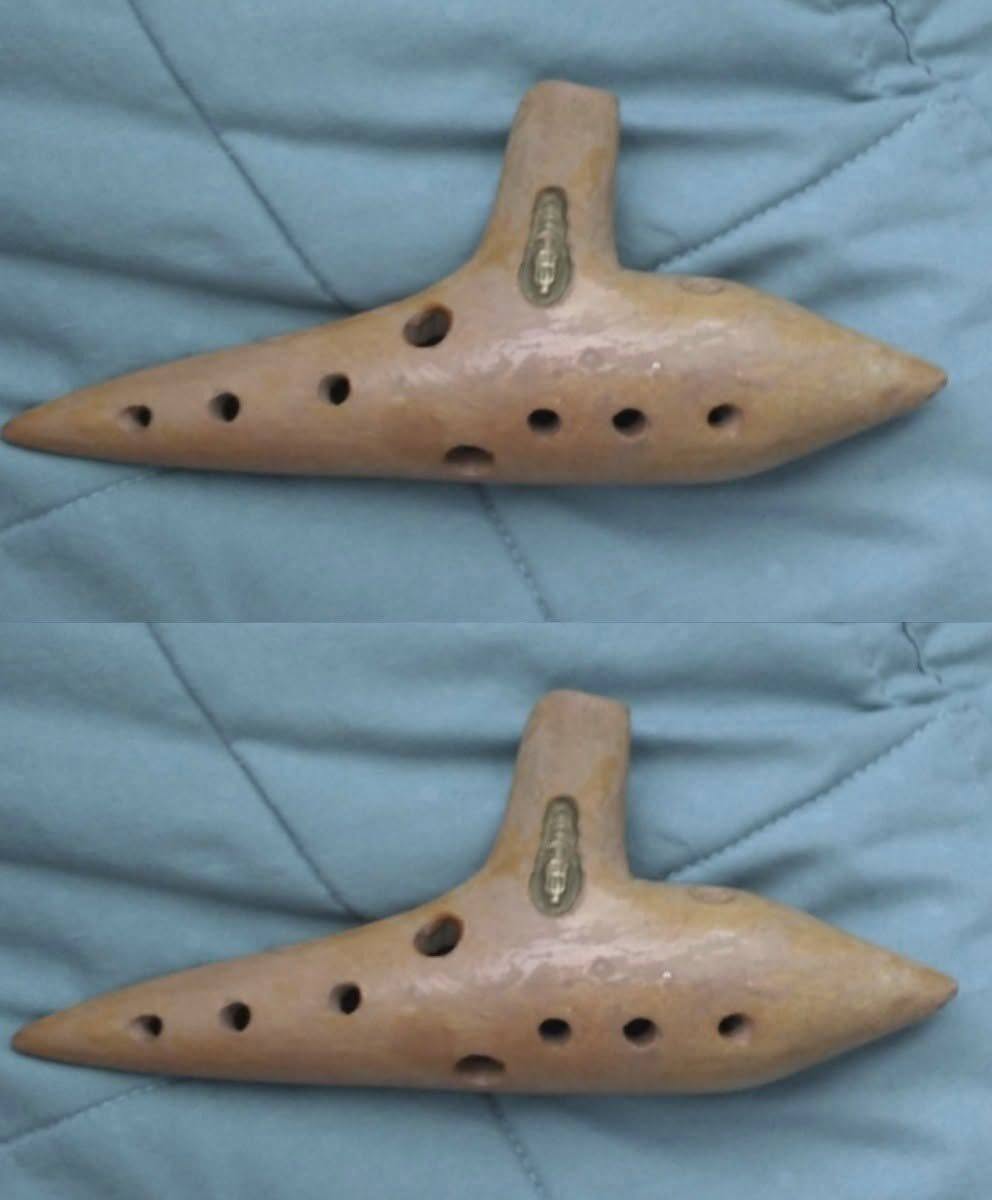
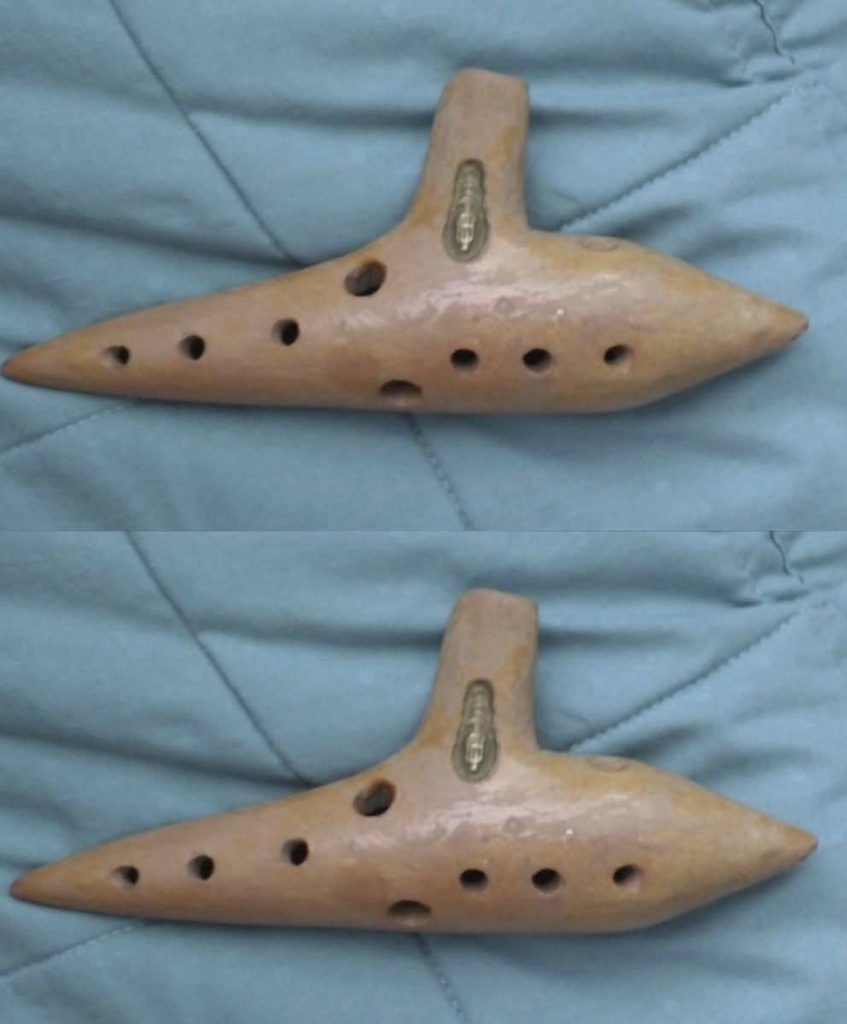
Sometimes, the most interesting thrift-store discoveries are the objects that look mysterious at first glance. One shopper came across an unusual clay instrument for just $1, featuring several holes and a small metal fitting. The markings reportedly read “ANT. CANELLA – FERRARA, ITALIA.” But what exactly is it, and could it be valuable?
The answer is fascinating: the object appears to be a vintage Italian ocarina, a musical instrument with a history stretching back more than a century.
What Is an Ocarina?
An ocarina is a small wind instrument that produces sound when someone blows into its mouthpiece and covers or uncovers the finger holes. It is often made from terracotta or ceramic and can produce a gentle, flute-like melody.
Although ocarinas come in many shapes and sizes, the instrument in the photograph has the characteristic elongated body and multiple finger holes associated with traditional Italian examples.
Ocarinas are played by musicians, folk-music enthusiasts, and collectors. Some are relatively modern and inexpensive, while older instruments made by recognized historical makers can attract considerably more interest.
Who Was Antonio Canella?
The inscription provides an important clue. Antonio Canella was an Italian ocarina maker associated with Ferrara, a city in northern Italy. Historical references indicate that he produced ocarinas around the late 19th and early 20th centuries.
Canella is also associated with innovative designs, including double ocarinas and instruments featuring metal mechanisms that could alter their pitch.
Because fewer examples of his work are commonly encountered on the market than those of some other Italian makers, an authentic Canella instrument can be an appealing find for a specialist collector.
How Much Could It Be Worth?
The value depends on the exact model, age, condition, authenticity, and whether the instrument still plays properly.
Comparable Canella ocarinas have been offered by specialist dealers for approximately €165 to €295, while other examples have appeared in private listings for different amounts. These are asking prices, however, and do not guarantee what a particular instrument would sell for.
Before estimating the value of the $1 discovery, a few details need to be checked:
- Condition: Cracks, chips, repairs, or missing components can affect value.
- Authenticity: The maker’s inscription is useful evidence, but the instrument should be examined more closely.
- Musical function: A working instrument may appeal to more buyers than a damaged example.
- Exact model: Its size, tuning, and metal fittings can help distinguish it from other Canella instruments.
- Market demand: Specialist collectors may value a rare model differently from general antique buyers.
If the pictured instrument is authentic and in good condition, it could potentially be worth considerably more than the $1 purchase price. An exact valuation cannot be established from the photograph alone.
What Should the Finder Do Next?
Rather than cleaning it aggressively or attempting repairs, the owner should preserve the instrument as found and photograph all sides, including the maker’s mark, mouthpiece, metal fitting, and any damage.
The next step would be to ask a specialist in antique musical instruments or Italian ocarinas to identify the model. Comparing it with documented Canella examples can help establish a more realistic resale estimate.
A Small Purchase With a Remarkable History
This discovery is a reminder that thrift stores can occasionally reveal objects with genuine historical and musical significance. What initially looks like an unusual clay ornament may actually be a collectible instrument connected to a traditional Italian craft.
Would you have recognized this vintage ocarina at a thrift store, or would you have walked right past it? Share your thoughts in the comments!