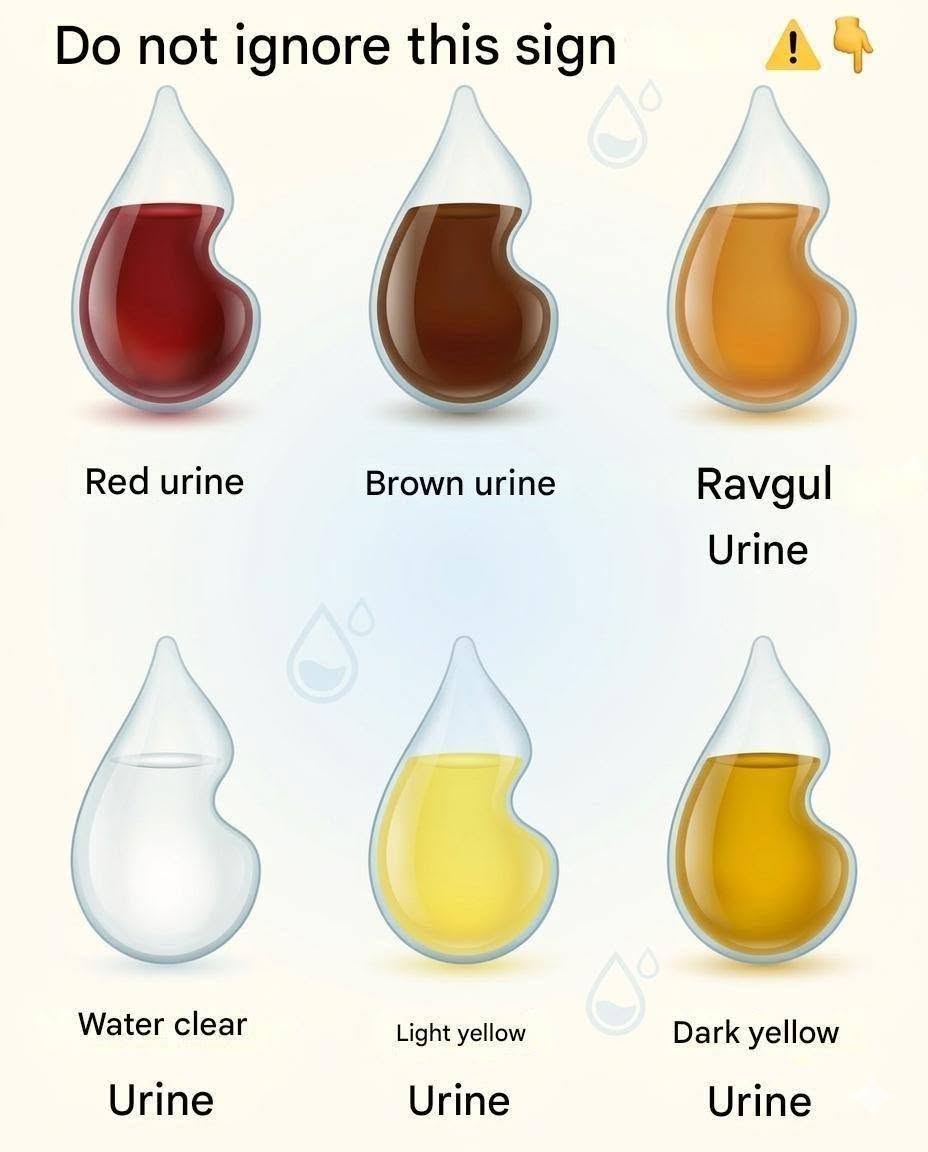
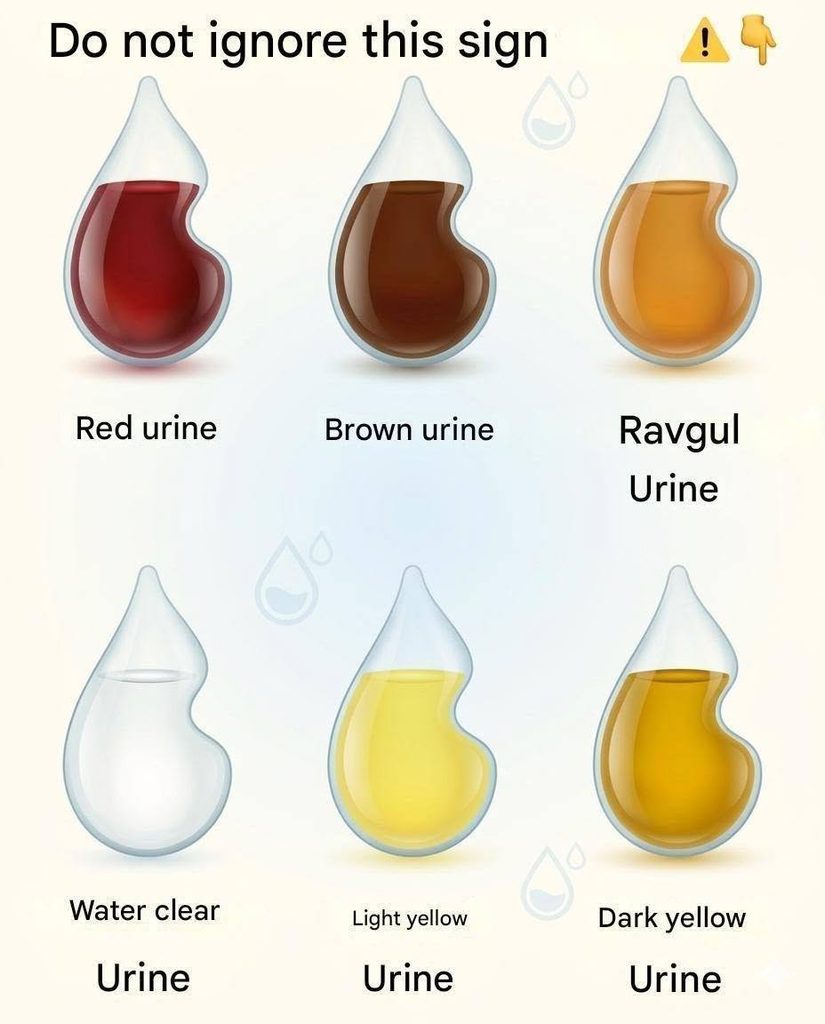
Your urine can change color throughout the day, and most changes are harmless. Hydration, food, vitamins and medications can all affect its appearance. But some colors deserve more attention.
Here’s what the different shades may mean 👇
💧 Clear Urine
Very clear urine usually means you’re drinking plenty of fluids. Occasional clear urine isn’t usually a concern, but persistently completely clear urine may mean you’re drinking more water than you need.
💛 Light Yellow Urine
This is generally the normal, well-hydrated color. A pale yellow or straw color usually indicates that you’re getting enough fluids.
🟡 Dark Yellow Urine
Dark yellow or amber urine commonly means your urine is more concentrated, often because you haven’t had enough fluids or have been sweating.
Drinking fluids normally should make it lighter again.
🟠 Orange Urine
Orange urine can result from dehydration, certain medications or vitamins. In some cases, it can be associated with liver or bile-duct problems, especially if you also notice yellowing of the skin or eyes.
🔴 Red or Pink Urine
This one deserves attention.
Red or pink urine can come from foods such as beets, but it can also indicate blood in the urine. Causes can include urinary tract infections, kidney stones and other urinary-tract problems.
If you see blood and can’t clearly explain it by something you’ve eaten or a medication, get it checked by a healthcare professional.
🟤 Brown or Cola-Colored Urine
Dark brown urine can occur with significant dehydration, but it can also be associated with liver or kidney problems, certain medications, or severe muscle injury after extreme exercise.
If it stays brown despite normal hydration, it should be medically evaluated.
⚠️ Don’t Diagnose Yourself From Color Alone
Urine color is only one clue. The same color can have several different causes.
Seek medical advice if an unusual color persists, especially if you also have:
- Pain or burning when urinating
- Fever or chills
- Back or abdominal pain
- Yellow skin or eyes
- Visible blood or blood clots
- A significant decrease in urine output
A simple urinalysis can help determine whether there is blood, infection, protein or another abnormality.
👉 Light yellow is generally the color you’re looking for—but red, brown, or persistent unusual colors shouldn’t simply be ignored.
What color is your urine most of the time? 💧👀