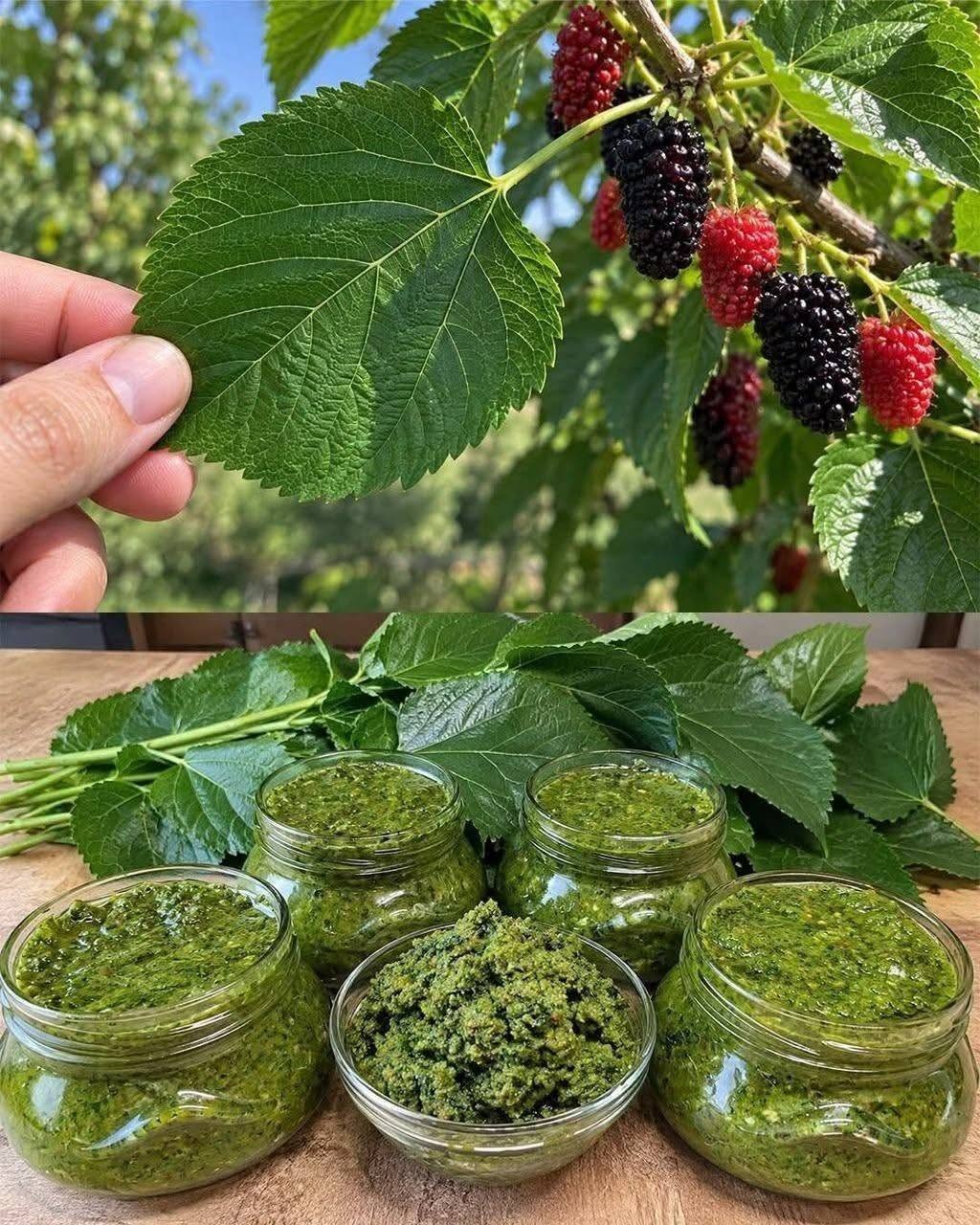
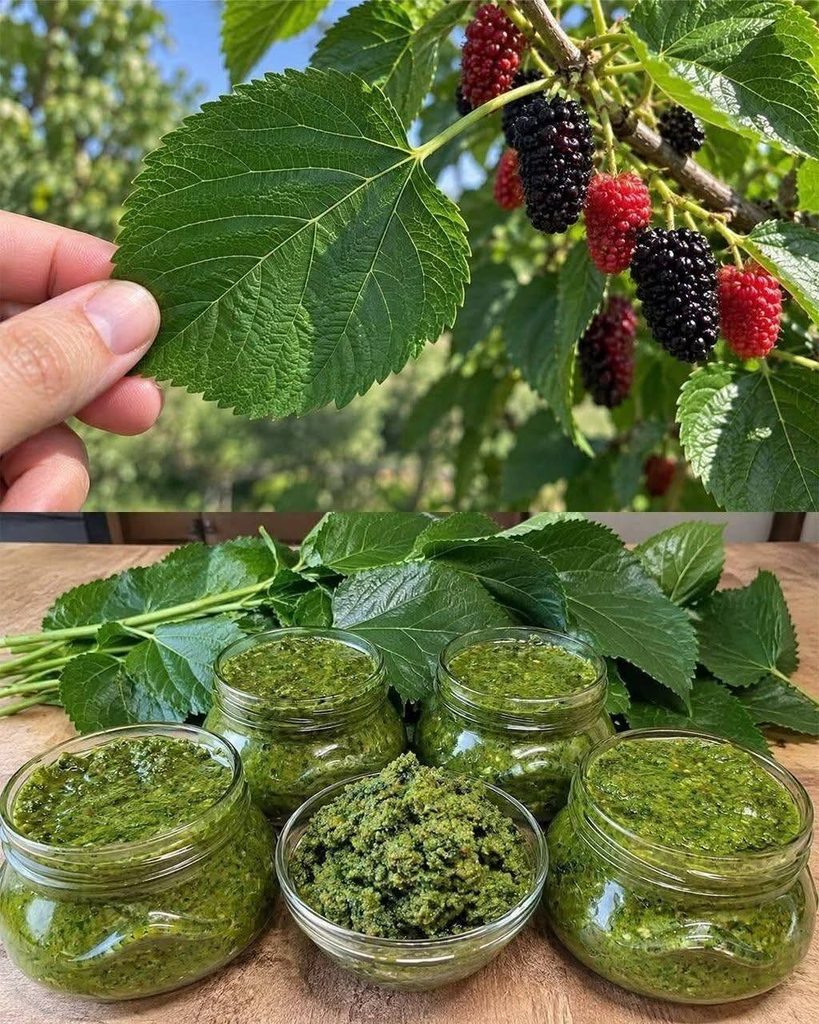
When people see a mulberry tree, they usually think about the sweet berries hanging from its branches.
But the leaves are useful too—and they have a long history of being used as food, tea and animal feed.
The viral image showing jars of a green paste made from mulberry leaves, however, should not be taken as proof that this preparation is a miracle remedy.
🍃 1. Mulberry Leaves Are Edible
Mulberry leaves, particularly those from the white mulberry (Morus alba), have traditionally been used in several Asian cuisines.
They can be prepared in different ways, including tea and cooked foods. Mulberry leaves are also famously used as the primary food of silkworms.
☕ 2. They Can Be Used to Make Tea
Dried mulberry leaves are commonly prepared as an herbal tea.
The leaves contain compounds such as 1-deoxynojirimycin (DNJ), flavonoids and other polyphenols, which are being studied for their biological effects.
But “natural” doesn’t automatically mean “medicine.”
🩸 3. Researchers Are Interested in Blood Sugar
This is probably the most interesting area of mulberry-leaf research.
Some human studies suggest that mulberry leaf or mulberry-leaf extract may reduce the rise in blood glucose after eating carbohydrates. A systematic review and meta-analysis of 12 clinical trials involving 615 adults also found reductions in several measures of glucose control. However, the studies varied considerably, and major health organizations still consider the overall evidence preliminary.
So it would be more accurate to say:
Mulberry leaves may have blood-sugar-modulating effects—not that they cure diabetes.
❤️ 4. Other Potential Benefits Are Being Studied
Researchers have investigated mulberry leaves for possible effects involving:
- Blood glucose
- Cholesterol and triglycerides
- Oxidative stress
- Inflammation
- Cardiovascular risk
Some results are promising, but much of the evidence remains preliminary, and more high-quality human research is needed.
🐛 5. They’re Extremely Important for Silkworms
There’s another fascinating reason mulberry leaves are important.
Silkworms (Bombyx mori) depend heavily on mulberry leaves for food.
Without a reliable supply of mulberry foliage, traditional silk production would be much more difficult.
So the leaves aren’t simply “waste” left behind after harvesting the fruit—they have an important agricultural role.
⚠️ What About the Green Paste in the Image?
This is where it’s important to be careful.
The photograph shows jars containing a green, ground-up preparation, but the image alone doesn’t establish exactly how it was prepared, what ingredients were added, or how safe it is to consume.
You shouldn’t assume that copying an unidentified social-media recipe will provide the same effects as preparations studied in clinical research.
⚠️ People Taking Diabetes Medication Should Be Careful
Because mulberry leaf may lower blood glucose, combining concentrated mulberry-leaf products with diabetes medications could potentially contribute to blood sugar becoming too low.
Reported side effects can also include digestive problems such as bloating, gas, constipation or loose stools. Safety data for long-term use are limited.
Pregnant or breastfeeding women should also speak with a healthcare professional before using concentrated mulberry-leaf supplements because reliable safety information is limited.
🌿 The Bottom Line
Mulberry leaves are genuinely interesting—not because they are a miracle cure, but because they are a useful plant resource with nutritional, traditional and scientifically studied properties.
You can enjoy mulberries for their fruit, while the leaves have their own fascinating history in food, tea and silk production.
Just remember:
A promising plant is not the same thing as a proven medicine. 🍃
Would you ever try mulberry-leaf tea? ☕🌿