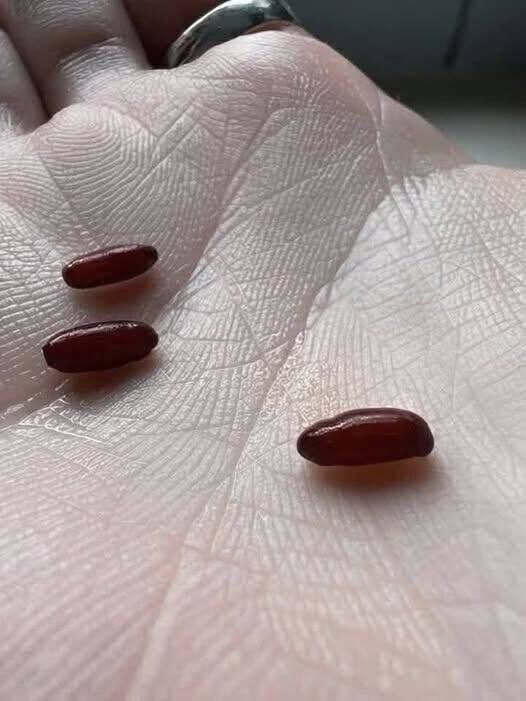
These small, dark reddish-brown, shiny, capsule-like objects are fly pupae (most commonly from houseflies, blowflies, or flesh flies).
What Is a Fly Pupa?
- The Fly Life Cycle: After fly larvae (maggots) hatch from eggs and feed, they crawl away from their food source to find a dry, dark, sheltered place to pupate.
- The Transformation Stage: During pupation, the outer skin hardens into a smooth, oval shell called a puparium. Inside this protective casing, the maggot transforms into an adult fly over the course of a few days to a week.
Why Were They Found on Your Bed?
Finding pupae on or around a bed usually points to one of a few common scenarios:
- A Nearby Food or Waste Source: Maggots will crawl surprising distances away from a food source (like an overflowing trash can, a spilled plate, decaying organic matter, or a dead rodent in a wall/attic) to find a quiet, dark spot to pupate.
- Pets: If you have dogs or cats that sleep on the bed, they can accidentally track in pupae or larvae on their paws or fur after playing outdoors or near trash bins.
- Open Windows or Unscreened Vents: Adult female flies often enter bedrooms attracted to warmth or scent, laying eggs in potted plants, laundry, or trash.
What You Should Do Next
- Inspect the Mattress & Baseboards: Check under the bed, around baseboards, beneath sheets, and in dark crevices for more pupae or crawling larvae.
- Remove Them: Pick up any pupae using a paper towel, seal them in a plastic bag, and throw them away in an outdoor trash bin before they hatch into adult flies.
- Locate the Source: Check nearby trash cans, laundry hampers, pet bedding, or hidden food spills in the room.
- Wash Bedding in Hot Water: Strip and wash your sheets, mattress cover, and blankets on a high-temperature setting.