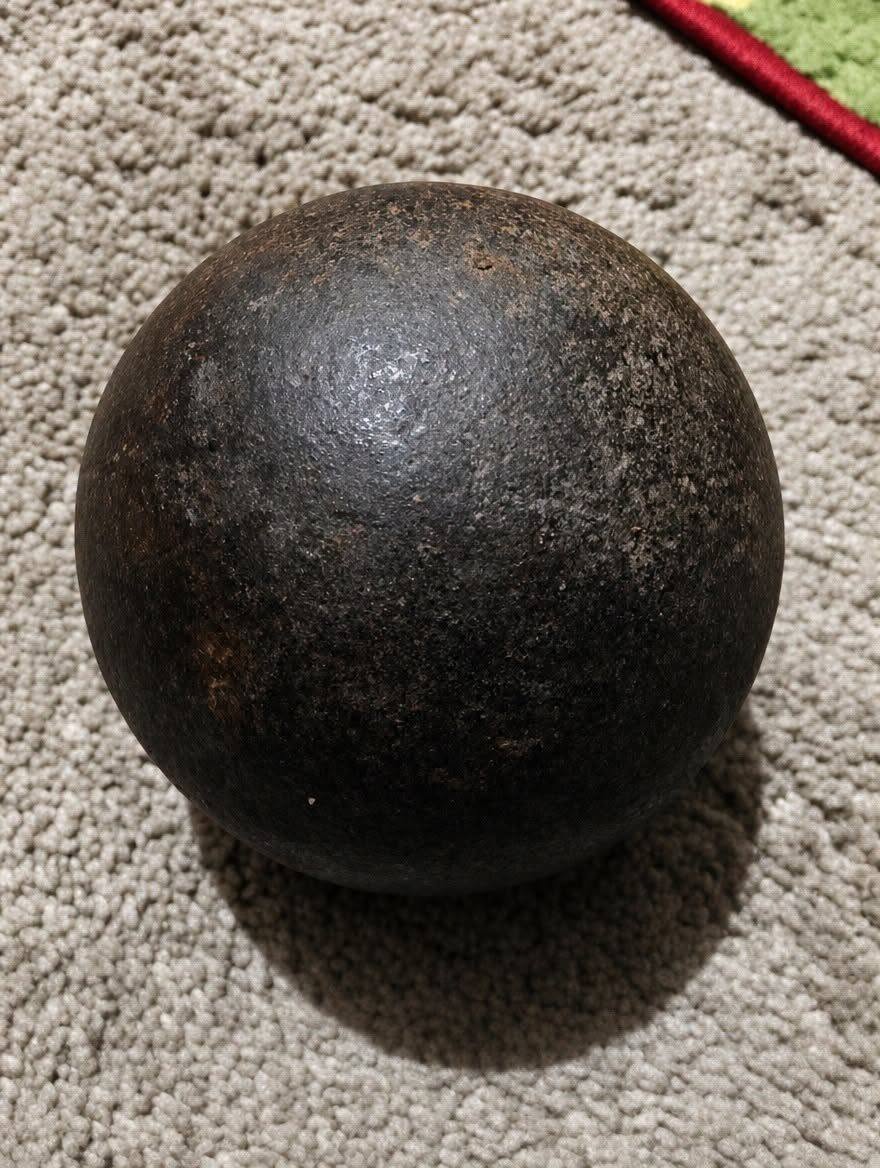
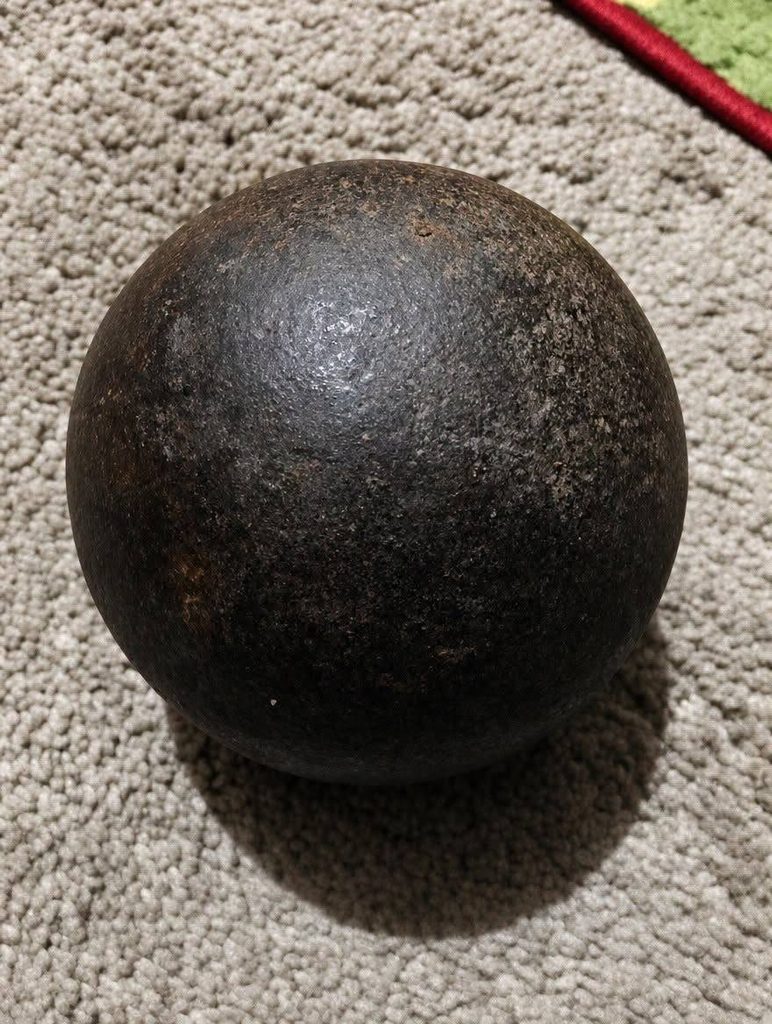
While many people immediately suspect a historical cannonball when finding a heavy iron or steel sphere in a creek, this object is almost certainly a ball mill grinding media ball (or tumbling ball) from industrial mining or milling operations.
1. Ball Mill Grinding Ball (Most Likely)
Industrial facilities, stone quarries, coal processing plants, and mining operations use large rotating steel drums called ball mills.
- How They Work: Hundreds of heavy steel or forged iron balls are tumbled inside a drum to grind rocks, ore, cement, or coal down into fine powder.
- Why Creek Beds? Mining and industrial runoff, historical mill sites, or road construction aggregate often cause these heavy balls to wash downstream into creek beds over time.
- Physical Characteristics: High-carbon forged steel ball-mill media typically range from 1 to 5 inches in diameter and weigh around 15–18 lbs at full size before wearing down. They are smoother and denser than crude historical cast-iron cannonballs.
2. Could It Be a Civil War Cannonball (18-Pound Solid Shot)?
Because it was found in Kentucky and weighs ~17.8 lbs with a 5-inch diameter, it matches the dimensions of a Civil War-era 18-pounder solid shot (round shot).
- Solid Shot vs. Explosive Shell: If this is a historical artillery piece, it is a solid iron shot (a solid ball of iron without a fuze, explosive cavity, or black powder).
- Distinguishing Marks: Civil War cast-iron cannonballs typically exhibit rougher surface pitting, casting seams, or a sprue mark (where the iron was poured into the mold).
How to Tell the Difference
- Check for Seams or Cavities: Look for a mold line, casting mark, or fuze hole. A completely uniform, dense sphere is typically a steel mill ball.
- Magnetism & Material: Ball mill balls are made of forged alloy steel, whereas historical round shot was made of cast iron.
- Local History: Check if the creek bed is downstream from an old coal processing plant, rock quarry, or historical Civil War skirmish site.