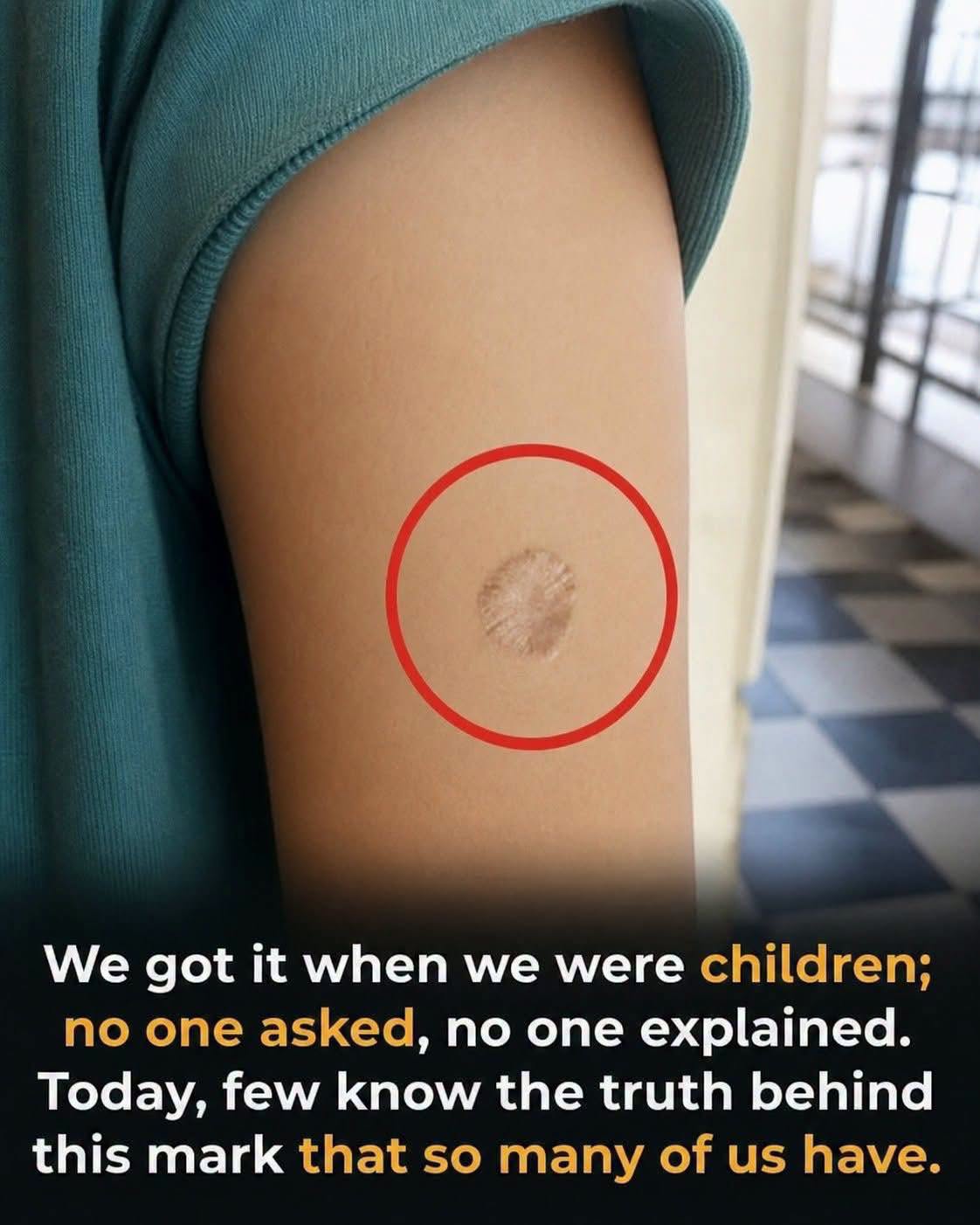
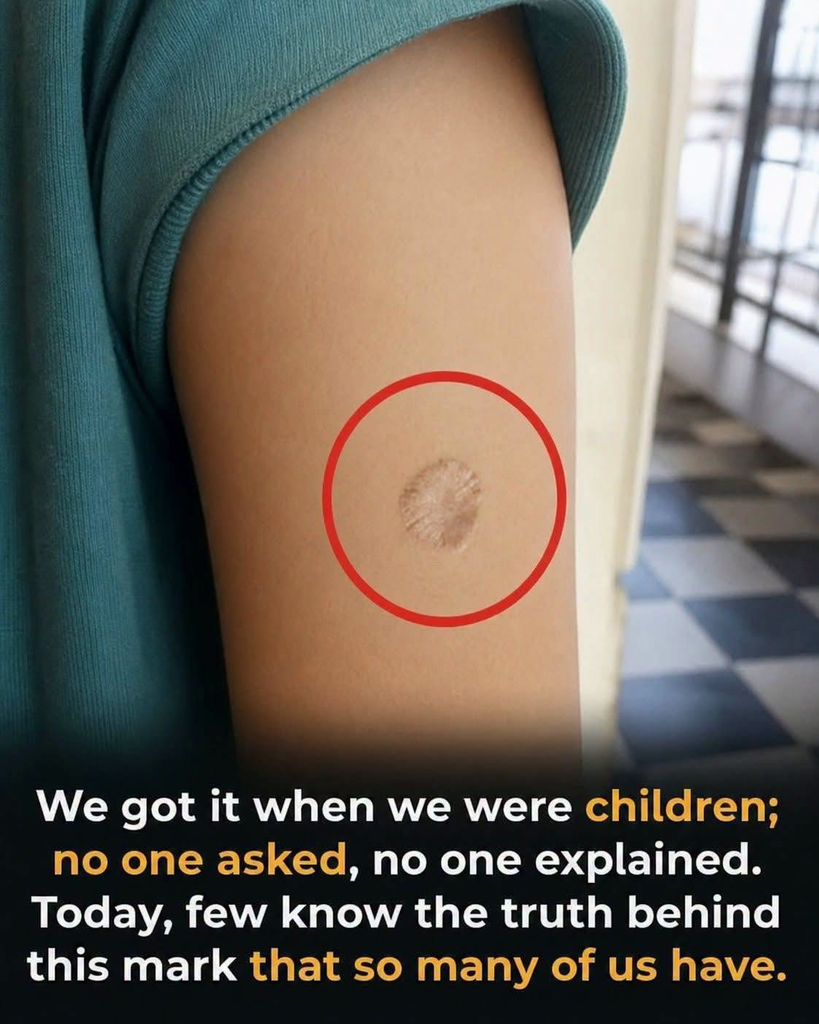
That small, round, pitted scar on the upper arm—shared by millions of people worldwide—is a lifelong mark left behind by a childhood vaccination. Depending on when and where you were born, this distinct scar comes from either the Smallpox vaccine or the BCG (Tuberculosis) vaccine.
1. Smallpox Vaccine Scar
For people born before the 1970s or 1980s, this scar is typically from the smallpox vaccine.
- How It Was Given: Instead of a standard hypodermic needle, healthcare workers used a bifurcated (two-pronged) needle. The needle was dipped in the vaccine solution and pricked into the skin multiple times in a small circle.
- Why It Scared: The localized infection created a small blister that scabbed over, dried, and eventually flaked off, leaving a pale, indented round scar.
- Why People Stop Having It: Smallpox was officially declared eradicated globally in 1980 by the World Health Organization (WHO), so routine vaccination ended worldwide around that time.
2. BCG (Tuberculosis) Vaccine Scar
For younger generations or individuals raised in countries where Tuberculosis (TB) remains prevalent, the scar is caused by the BCG (Bacille Calmette-Guérin) vaccine.
- How It Causes a Scar: The BCG vaccine is administered intradermally (just beneath the surface of the skin). It triggers a localized immune response that often forms a small raised bump, followed by a minor ulcer or scab weeks later.
- Healing Process: As the tissue heals over a few months, it leaves behind a small, flat, or slightly pitted circular scar on the upper arm or shoulder.
Did You Know? Because both vaccines leave a permanent physical mark, health officials historically used the presence of the scar as quick proof of immunization during outbreaks or travel screenings.