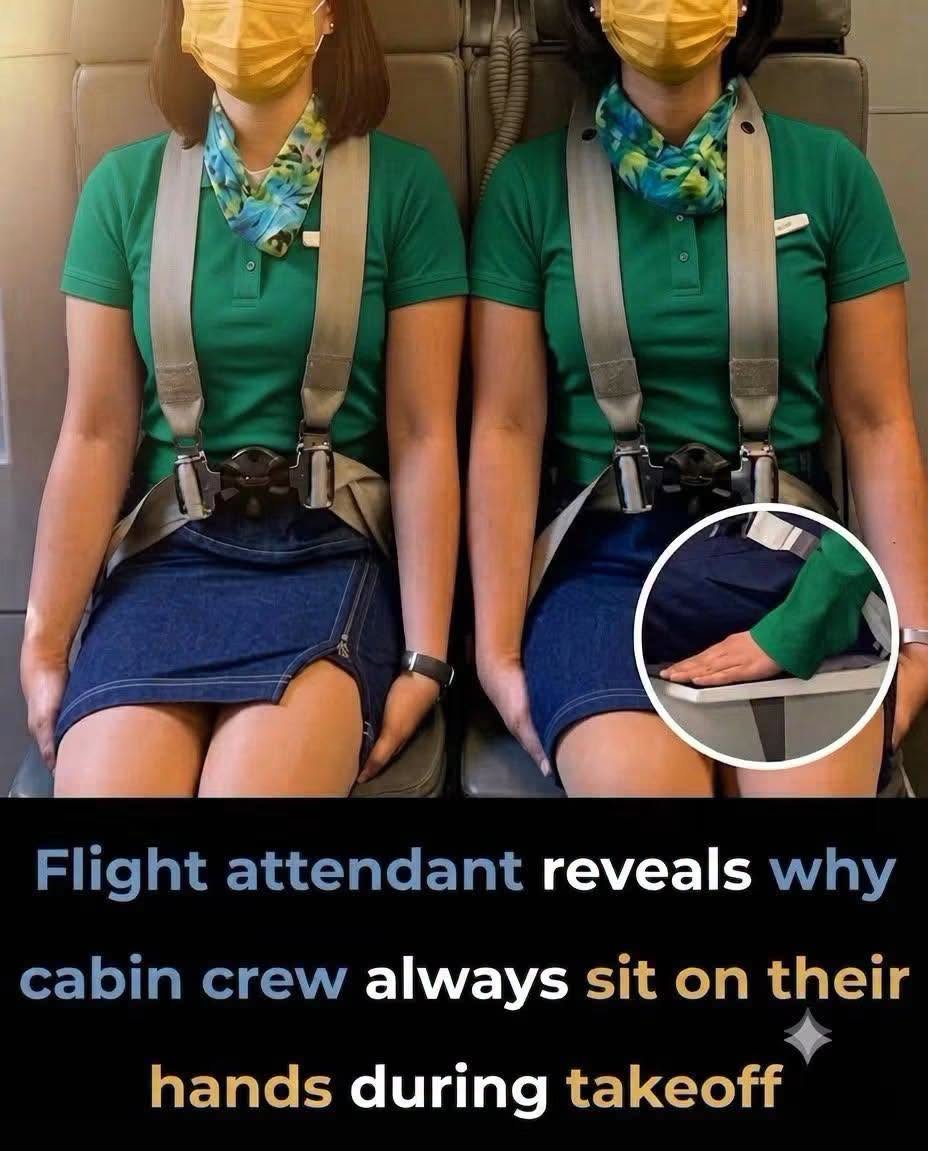
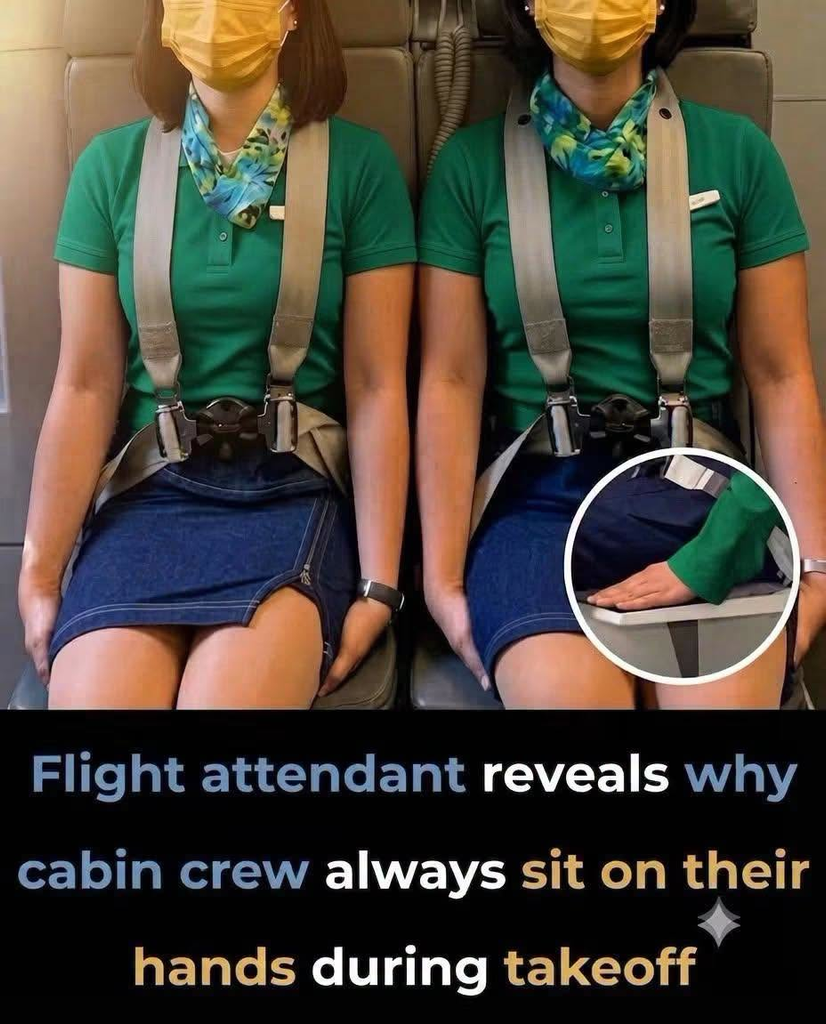
If you have ever noticed flight attendants sliding their hands under their thighs or buttocks during takeoff and landing, you are observing a standard safety protocol known in the aviation industry as the “Brace Position” (or rigid brace posture) for cabin crew.
1. Protecting Against Injury During Turbulence or Impact
During takeoff and landing—the two most critical phases of flight—the aircraft can experience sudden braking, severe turbulence, or hard impacts. Sitting on their hands (palms face up, arms rigid) helps secure their body posture:
- Restricting Movement: It prevents their arms and hands from flailing wildly or colliding with cabin structures during sudden acceleration or deceleration.
- Bone and Joint Protection: It keeps the delicate bones in the hands and wrists tucked under the body rather than extended where they could break or crush in an impact.
2. Maintaining an Upright Body Posture
When strapped into jump seats with four-point harnesses, sitting on palms helps keep the torso upright, shoulder blades back against the seatback, and spine properly aligned against the seat frame. This posture significantly reduces stress on the neck and back during sudden motion.
3. Performing the “Silent Review”
While assuming this physical brace position, flight attendants are trained to mentally go over safety procedures in a process called the Silent Review:
- Locating emergency equipment (extinguishers, flashlights, first-aid kits).
- Identifying primary and secondary emergency exits.
- Reviewing emergency evacuation commands and door operation procedures.
- Assessing environmental conditions outside the windows (e.g., fire, water, debris).
Key Takeaway: Sitting on their hands ensures flight attendants remain uninjured in an incident so they are physically capable of leading an immediate evacuation if necessary.