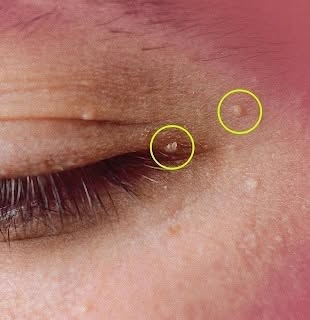
Informational posts and graphics offering solutions for small white bumps on the face generate high engagement across social media platforms. The shared image displays a close-up photo of a person’s eyelid and under-eye area with two small white bumps highlighted by yellow circles, topped with the catchy title: “How to Get Rid of Milia: Those Annoying Fat Cysts….”.
While these tiny white bumps are common and harmless, labeling milia as “fat cysts” is medically inaccurate, and attempting to pop them at home poses significant skin risks. Milia are not composed of excess fat or sebum, but rather keratin trapped underneath the skin’s surface.
Here is the dermatological breakdown of milia, the mechanics behind viral skincare clickbait, and safe guidelines to manage them:
1. The Problem: Misleading Terminology and Dangerous DIY Trends
Viral beauty and skincare content frequently relies on engagement-driven hooks that misinform consumers:
- Inaccurate Terminology (“Fat Cysts”): Labeling milia as “fat cysts” misleads people into believing that harsh scrubs, degreasing agents, or dietary changes will eliminate them.
- Promoting Risky Home Extractions: Suggesting DIY methods to squeeze, pop, or use unsterilized needles on bumps—especially near the delicate eye area—increases the risk of severe infection, scarring, and skin damage.
- Targeted Visual Highlights (Yellow Circles): Circling minor skin imperfections creates a sense of aesthetic urgency, encouraging users to click for quick fixes.
2. Explanation: What Are Milia and Why Do They Form?
From a histological and dermatological perspective, milia formation follows specific biological processes:
- Keratin Retention: Milia are tiny, benign cysts filled with keratin—a structural protein found in skin, hair, and nails—trapped under the outer layer of the skin (epidermis). They have no connection to cholesterol levels, sebum production, or dietary fats.
- Primary Locations: They commonly appear around the eyelids, under-eye area, cheeks, and nose, where skin is thin or has experienced localized cell accumulation.
- Common Causes: In adults, milia occur when dead skin cells fail to slough off naturally, becoming trapped during skin turnover. Heavy, occlusive skincare products, sun damage, or recovery from minor skin injuries can also contribute to their formation.
3. Advice & Steps: How to Safely Manage Milia
To encourage skin turnover and manage milia without compromising your skin barrier, follow these practical steps:
1. Never Squeeze or Pick
- Unlike acne comedones or blackheads, milia sit under a continuous layer of skin without an open pore. Squeezing them will damage surrounding tissue without releasing the trapped keratin.
2. Incorporate Gentle Chemical Exfoliants
- Use products containing mild chemical exfoliants, such as salicylic acid (BHA) or glycolic acid (AHA), to encourage natural cell shedding. Incorporating a low-strength retinoid into your evening routine can also support healthy epidermal renewal over time.
3. Seek Professional Extraction
- If milia are bothersome, consult a licensed dermatologist or skincare specialist. They can perform a quick, sterile extraction using a specialized lancet without tearing or scarring the skin.
Disclaimer & Safety Guidelines
This article is provided for general educational, skincare literacy, and fact-checking purposes. Viral beauty posts often misrepresent benign skin conditions and promote unsafe home procedures. Avoid applying harsh exfoliating acids near the eyes, and consult a board-certified dermatologist for professional procedures in the periorbital area.