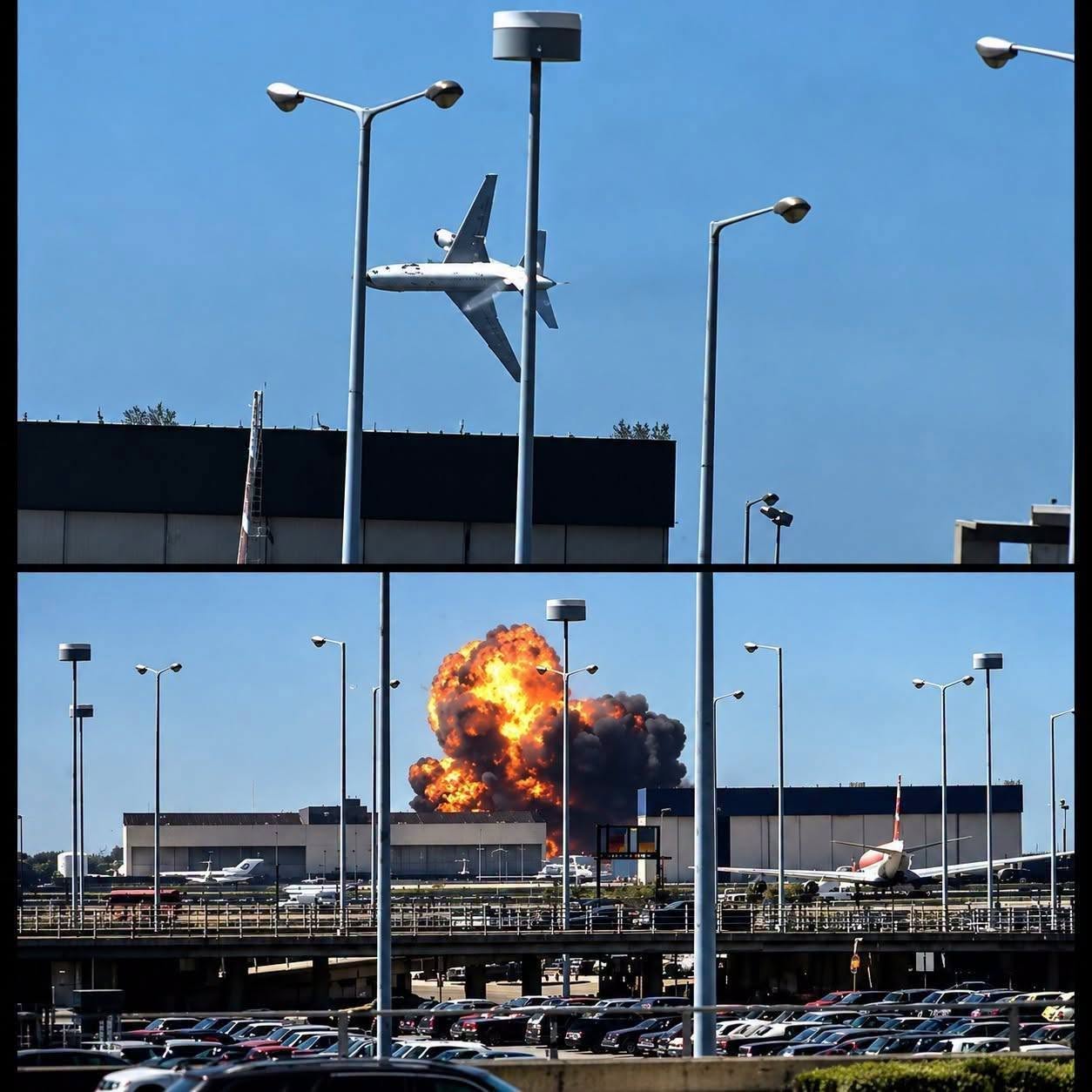
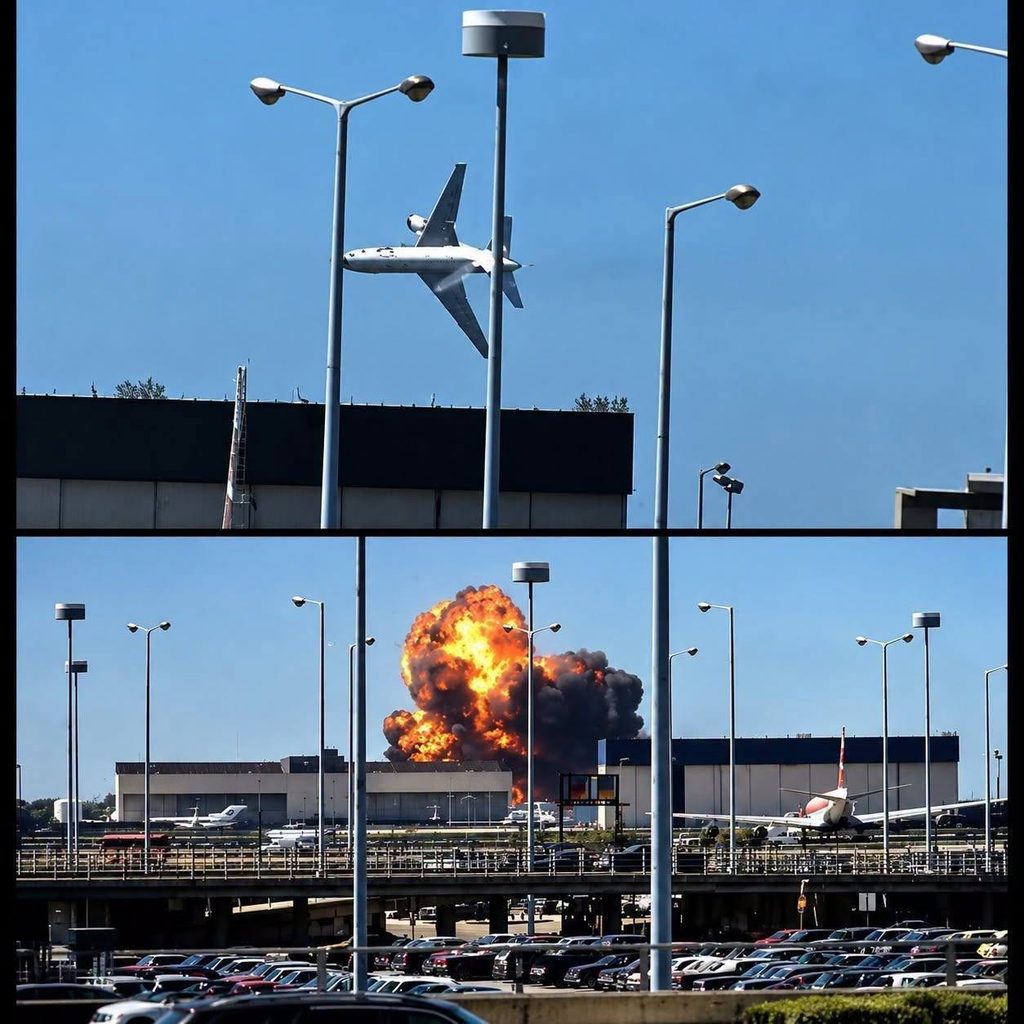
On May 25, 1979, American Airlines Flight 191 crashed shortly after taking off from O’Hare International Airport in Chicago, Illinois. The disaster killed all 271 people aboard the aircraft and two people on the ground, bringing the total death toll to 273.
The tragedy remains one of the deadliest aviation accidents in United States history. Investigators later determined that a combination of maintenance-related structural damage and the loss of critical aircraft systems caused the crash.
What Happened to Flight 191?
Flight 191 was a McDonnell Douglas DC-10-10 scheduled to fly from Chicago to Los Angeles. The aircraft began its takeoff in clear weather, but a catastrophic failure occurred as it lifted off the runway.
The engine and supporting pylon on the left wing separated from the aircraft. The assembly fell away as the plane continued climbing, leaving the pilots facing an emergency they could not fully identify from the cockpit.
The separation also damaged hydraulic lines and disrupted electrical power to several important instruments and warning systems.
Why Did the Plane Crash?
According to the National Transportation Safety Board (NTSB), the damage caused the leading-edge slats on the outer portion of the left wing to retract unexpectedly.
These slats help an aircraft generate lift at lower speeds. With the left-wing slats retracted while the corresponding right-wing slats remained extended, the aircraft developed an imbalance in lift.
As the plane continued climbing, the left wing stalled, and the aircraft rolled sharply to the left. It lost control and crashed into an open field near the airport, with wreckage spreading into a nearby mobile-home park.
The pilots had very little time to respond, and the failure of warning systems made the emergency particularly difficult to manage.
The Role of Improper Maintenance
Investigators concluded that maintenance procedures contributed directly to the engine and pylon separation.
The NTSB identified damage associated with improper procedures used during engine removal and installation. The investigation also identified weaknesses in aircraft design, maintenance oversight and communication among the airline, manufacturer and aviation regulators.
The findings showed that the disaster was not simply the result of an engine failure. It involved a chain of technical and procedural failures that combined at a critical moment during takeoff.
The Human Cost
All 271 passengers and crew members aboard Flight 191 died. Two people on the ground were also killed, and others were injured.
The crash devastated families and communities and drew national attention to aviation safety. The loss of life also reinforced the importance of rigorous maintenance procedures, effective warning systems and independent accident investigations.
How the Disaster Changed Aviation Safety
The investigation highlighted the need for careful control of aircraft maintenance work, particularly when major components such as engines and their supporting structures are removed and reinstalled.
It also demonstrated how damage to one part of an aircraft can affect several systems at once. Safety procedures must account for these connections, including the possibility that pilots may lose access to important warnings during an emergency.
The findings became part of the broader history of improvements in aviation maintenance and safety oversight.
What About the Viral Photograph?
The image circulating with the claim about 273 deaths shows an aircraft near an airport building and a large explosion in a second scene. However, the image itself should not be treated as an authenticated photograph of Flight 191’s final moments.
The historical crash and its death toll are documented by the NTSB and the Federal Aviation Administration. The supplied composite image does not independently establish that it depicts the actual aircraft or explosion.
Remembering the Victims
American Airlines Flight 191 remains a sobering reminder of the importance of aviation safety and the consequences of failures in maintenance and oversight.
Behind the number of 273 victims were individual lives, families and communities forever affected by the disaster. Remembering the tragedy also means understanding the lessons investigators identified to help prevent similar accidents.
What do you think is the most important lesson from Flight 191: stronger maintenance procedures, better warning systems, or more effective safety oversight?