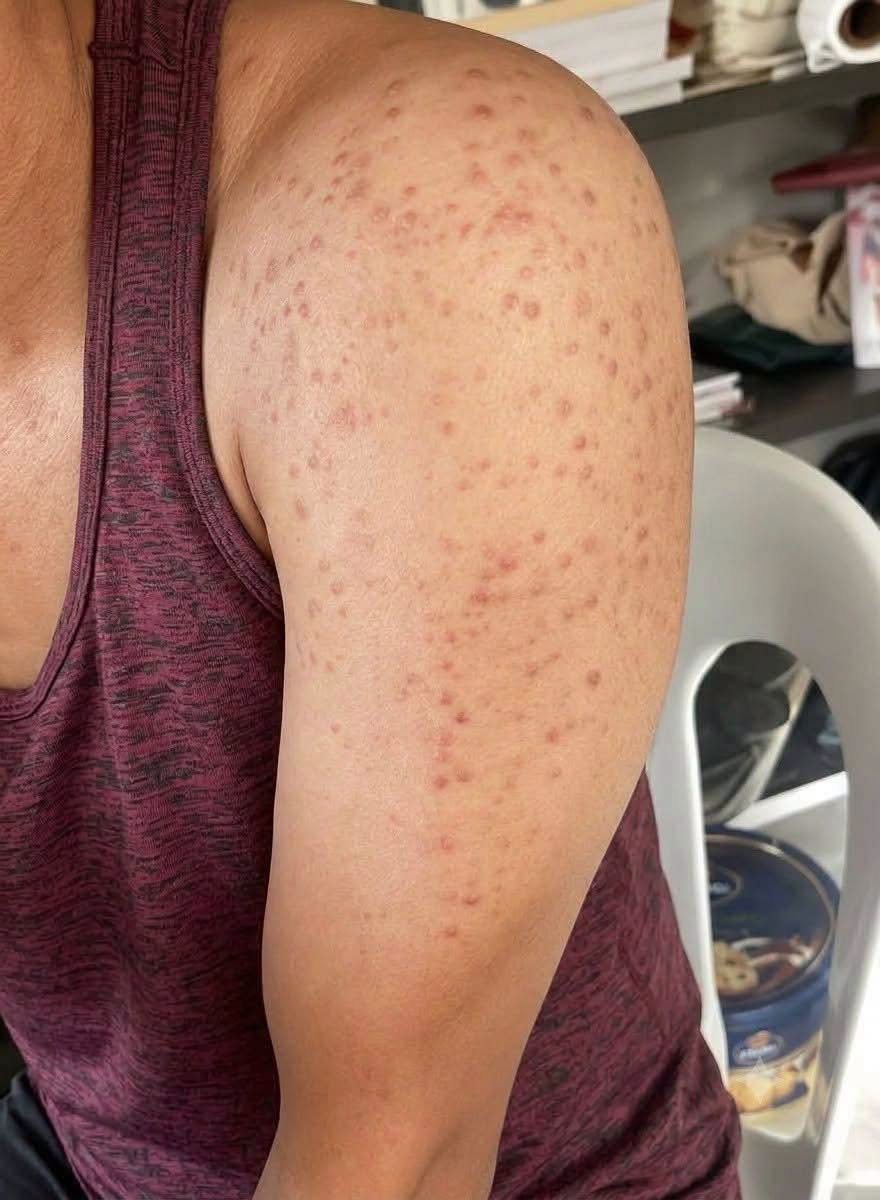
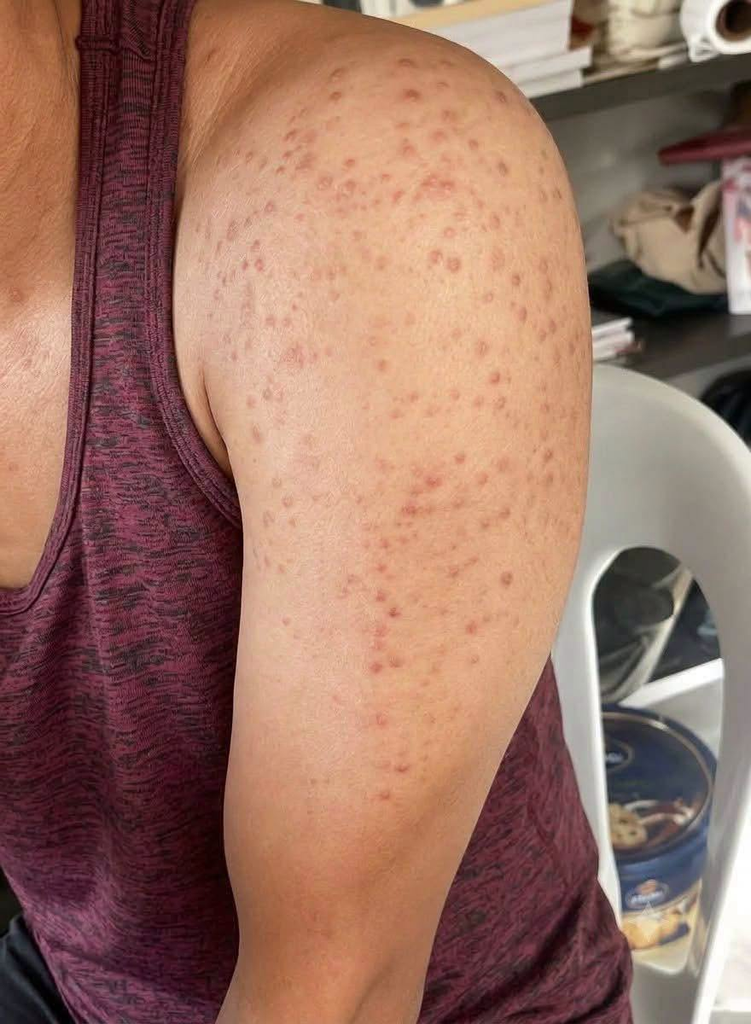
Small red bumps covering the upper arms can look alarming, especially when they appear in large numbers. Images showing this type of skin change are sometimes shared online with dramatic captions suggesting that the condition is a consequence of sleeping with someone.
However, the appearance of these bumps alone cannot establish their cause, and the image does not prove that they are related to sexual activity. Several common skin conditions can produce similar symptoms, and an accurate diagnosis depends on additional information.
1. Keratosis Pilaris: A Common Cause
Keratosis pilaris is a common, harmless skin condition that often affects the upper arms, thighs, and sometimes the cheeks. It develops when keratin, a protein found in the skin, builds up and blocks hair follicles.
Typical signs include:
- Small, rough bumps that may be red, pink, or skin-colored.
- Skin that feels dry or resembles sandpaper.
- Bumps that become more noticeable when the skin is dry.
- Little or no pain, although mild itching can occur.
Keratosis pilaris is not contagious and is not a sexually transmitted infection.
2. Folliculitis: Inflammation of Hair Follicles
Folliculitis occurs when hair follicles become inflamed, sometimes because of bacteria, yeast, friction, sweating, or other irritation.
Possible symptoms include red bumps centered around hair follicles, small pus-filled spots, tenderness, or itching. Tight clothing, heavy sweating, and shaving can sometimes contribute to the problem.
Unlike keratosis pilaris, some forms of folliculitis may require medical treatment, particularly when the inflammation is widespread, painful, or persistent.
3. Other Possible Causes
Other conditions can produce similar-looking bumps, including acne-like eruptions, contact dermatitis, allergic reactions, and certain infections.
Some sexually transmitted infections can cause skin changes, but a photograph of bumps on the arm is not enough to identify one. Diagnosis requires considering the person’s symptoms, medical history, exposure risks, and sometimes laboratory testing.
4. How to Care for the Skin
For mild, non-painful bumps, general skin-care measures may help:
- Use a gentle, fragrance-free cleanser.
- Apply a moisturizer regularly, especially after bathing.
- Avoid harsh scrubbing, picking, or squeezing the bumps.
- Shower after heavy sweating and wear breathable clothing.
- Avoid using strong medicated creams or antibiotics without appropriate medical advice.
If the bumps spread, become painful, develop pus, or fail to improve, consult a healthcare professional. Seek prompt medical attention if a rash develops rapidly with fever, severe pain, or other significant symptoms.
5. When Should You Be Concerned About Sexual Transmission?
Skin bumps do not automatically indicate a sexually transmitted infection. Some infections spread through sexual contact, while many other skin conditions have no connection to sexual activity.
If there has been a possible sexual exposure and you are concerned about infection, a healthcare professional can recommend appropriate testing based on the type of exposure and its timing. Avoid relying on viral social media captions to make medical decisions.
The Bottom Line
The red bumps visible in this image could have several causes, and a photograph alone cannot confirm a diagnosis. Keratosis pilaris and folliculitis are among the possibilities, but a clinical examination may be needed to distinguish them.
The claim that these bumps are necessarily a consequence of sleeping with someone is misleading. Understanding the actual cause is more useful than assuming a connection based on appearance alone.