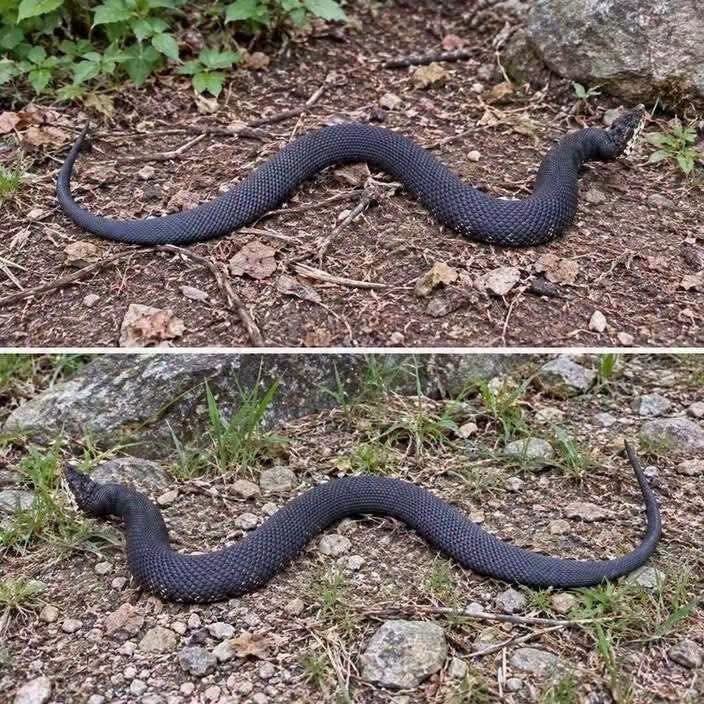
Spending time outdoors during turkey hunting season can bring unexpected encounters with wildlife, including snakes. While walking through wooded areas, rocky trails, and patches of thick vegetation, hunters may come across a snake resting on the ground or moving through the undergrowth.
A snake encounter can be unsettling, especially if someone believes they have been bitten. Knowing how to respond calmly, recognize potential warning signs, and seek appropriate medical care can help reduce the risk of serious complications.
What Kind of Snake Is Shown in the Photo?
The snake in the photograph has a dark, nearly black body and a relatively thick appearance. However, its species cannot be confirmed from these images alone.
Several snake species can have dark coloration, and their appearance may vary depending on age, location, and environmental conditions. Identifying a snake accurately often requires additional details, including the geographic location, its head and body markings, and other distinguishing features.
If you encounter a snake while hunting, do not approach it to obtain a better photograph. Keep a safe distance and allow it to move away naturally.
What Should You Do If a Snake Bites You?
A suspected snakebite should be treated as a medical emergency, particularly when the species is unknown. Even if the bite initially seems minor, some symptoms may develop over time.
If you or another person is bitten, take the following steps:
1. Move Away From the Snake
Carefully create distance between yourself and the snake to prevent another bite. Do not attempt to catch, kill, or handle it.
2. Seek Emergency Medical Care
Contact local emergency services or arrange immediate transportation to an appropriate medical facility. Do not wait for swelling, pain, or other symptoms to appear before seeking help.
3. Keep the Person Calm and Still
Limit unnecessary movement while waiting for assistance. Keep the affected limb as still as possible, since movement can contribute to the spread of venom through the body.
4. Remove Tight Items
Remove rings, watches, bracelets, and other restrictive items near the affected area before swelling develops.
5. Avoid Unproven Treatments
Do not cut the bite, attempt to suck out venom, apply ice, or use a tight tourniquet. These methods can cause additional harm or delay appropriate treatment.
Follow the instructions provided by emergency medical professionals.
Symptoms That May Follow a Snakebite
The effects of a snakebite depend on the species involved and whether venom was injected. Possible symptoms include:
- Pain or swelling