Have you ever brought home a beautiful watermelon, cut it open, and discovered that it was bland, dry, or disappointing? 🍉 You’re not alone! Choosing a perfectly ripe, juicy, and sweet watermelon can feel like a guessing game, but a few simple clues can help you make a better choice.
The good news is that you don’t need to cut open a watermelon at the market to judge its ripeness. By checking its field spot, shape, weight, skin, and other characteristics, you can improve your chances of bringing home a delicious fruit.
Here are seven practical tips to help you choose a sweeter watermelon on your next shopping trip.
1. Look for a Creamy Yellow Field Spot
One of the most useful clues is the field spot—the patch where the watermelon rested on the ground while growing.
A ripe watermelon often has a creamy yellow or golden field spot. This suggests that the fruit spent enough time resting in the field and may have had time to develop its flavor.
A very pale, white, or nearly absent field spot can sometimes indicate that the watermelon was harvested before reaching full maturity.
However, the field spot alone cannot guarantee sweetness. Consider it alongside the other signs of ripeness.
2. Check the Shape of the Watermelon
Watermelons come in different shapes depending on their variety. Some are round, while others are oval or elongated.
Choose a watermelon that looks reasonably symmetrical and has no unusual bulges, deep dents, or irregular growth patterns.
A common gardening tip claims that round watermelons are sweeter than elongated ones. In reality, shape is not a reliable way to determine sweetness. Variety and growing conditions have a much greater influence on flavor.
Choose the shape you prefer, but focus on the other signs for a better assessment.
3. Pick It Up and Check Its Weight
A watermelon should feel heavy for its size.
Why? A watermelon with plenty of water inside will generally feel heavier than a similarly sized fruit that has lost moisture.
When comparing two watermelons of similar size, choose the one that feels heavier in your hands.
This simple trick can help you find a watermelon that is juicy and fresh, although weight alone does not tell you exactly how sweet it will taste.
4. Examine the Skin and Color
Look for a watermelon with a firm rind and a clear contrast between its green stripes, if the variety has striped skin.
Avoid fruit with large soft areas, leaking juice, deep cuts, or significant bruising.
Some ripe watermelons have a duller surface rather than a glossy one, but appearance varies by variety. A shiny rind does not automatically mean that a watermelon is unripe.
Instead of relying on color alone, look for several signs that the fruit has developed normally.
5. Inspect the Stem, If It Is Still Attached
A dried, brown stem can be a useful clue, but it is not a guarantee of ripeness.
A stem may dry out after harvesting, so it does not necessarily tell you exactly when the watermelon was picked or how sweet it is.
If the stem is attached, consider its condition as one clue among several rather than the deciding factor.
6. Try the Gentle Tapping Test
Many people tap or knock on a watermelon before buying it.
A ripe watermelon is often described as producing a relatively deep, resonant sound, while an overripe or damaged fruit may sound dull. However, this test is subjective, and the sound can vary with the size, variety, and condition of the fruit.
If you use this method, compare a few watermelons of similar size rather than relying on one tap to make your decision.
7. Avoid Watermelons With Signs of Damage
Even a ripe watermelon may not be worth buying if it has been damaged or stored poorly.
Check for:
- Soft or sunken areas on the rind.
- Deep cracks or cuts.
- Leaking liquid.
- Mold or unusual discoloration.
- An unpleasant smell around damaged areas.
A firm, intact watermelon is generally the better choice.
What About the Small Circle at the Bottom?
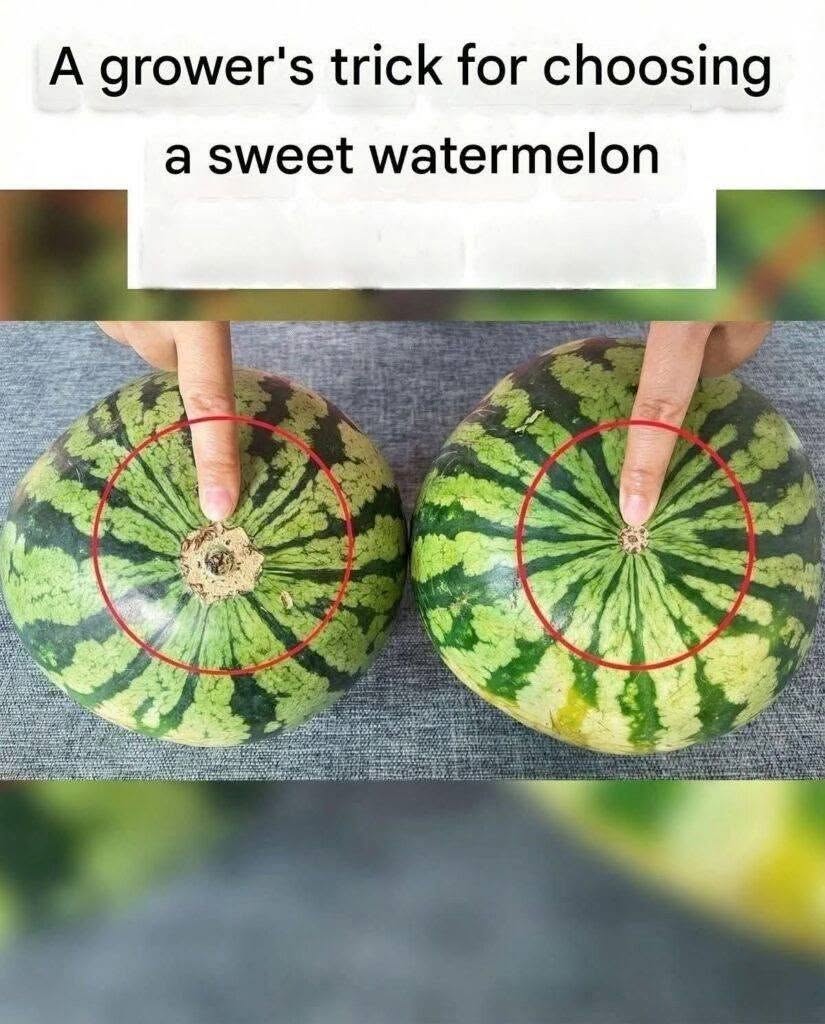
The photograph accompanying this article compares two watermelons with different-looking areas at the blossom end.
Some popular online tips claim that a small, tight circle means a sweeter watermelon, while a larger, rougher circle means a less sweet one.
However, there is no dependable evidence that the size of this circle determines sweetness. The appearance of the blossom scar is not a substitute for checking the field spot, weight, firmness, and overall condition.
Similarly, claims that one watermelon is sweeter simply because it is round or has a particular pattern should be treated with caution.
The Best Way to Choose a Sweet Watermelon
For the best chance of finding a delicious watermelon, combine several practical clues:
- Look for a creamy yellow or golden field spot.
- Choose a fruit that feels heavy for its size.
- Check that the rind is firm and free from serious damage.
- Compare similar watermelons rather than relying on one visual feature.
- Remember that variety, growing conditions, and harvest maturity all affect sweetness.
No external sign can guarantee a perfectly sweet watermelon. The only way to know its exact flavor is to taste it.
Final Thoughts
Choosing a sweet watermelon doesn’t have to be a guessing game. A few simple checks can help you select a fruit that is more likely to be ripe, juicy, and enjoyable.
Next time you’re at the market, take a moment to examine the field spot, compare the weight, and check the rind before making your choice.
🍉 What’s your secret for picking a sweet watermelon? Do you check the yellow spot, tap it with your fingers, or use another trick you learned from your parents or grandparents?
Share your favorite watermelon-buying tip in the comments!
#WatermelonTips #SweetWatermelon #FruitTips #KitchenTips #SummerFruit #FoodHacks #FreshFruit #HealthyEating #WatermelonSeason