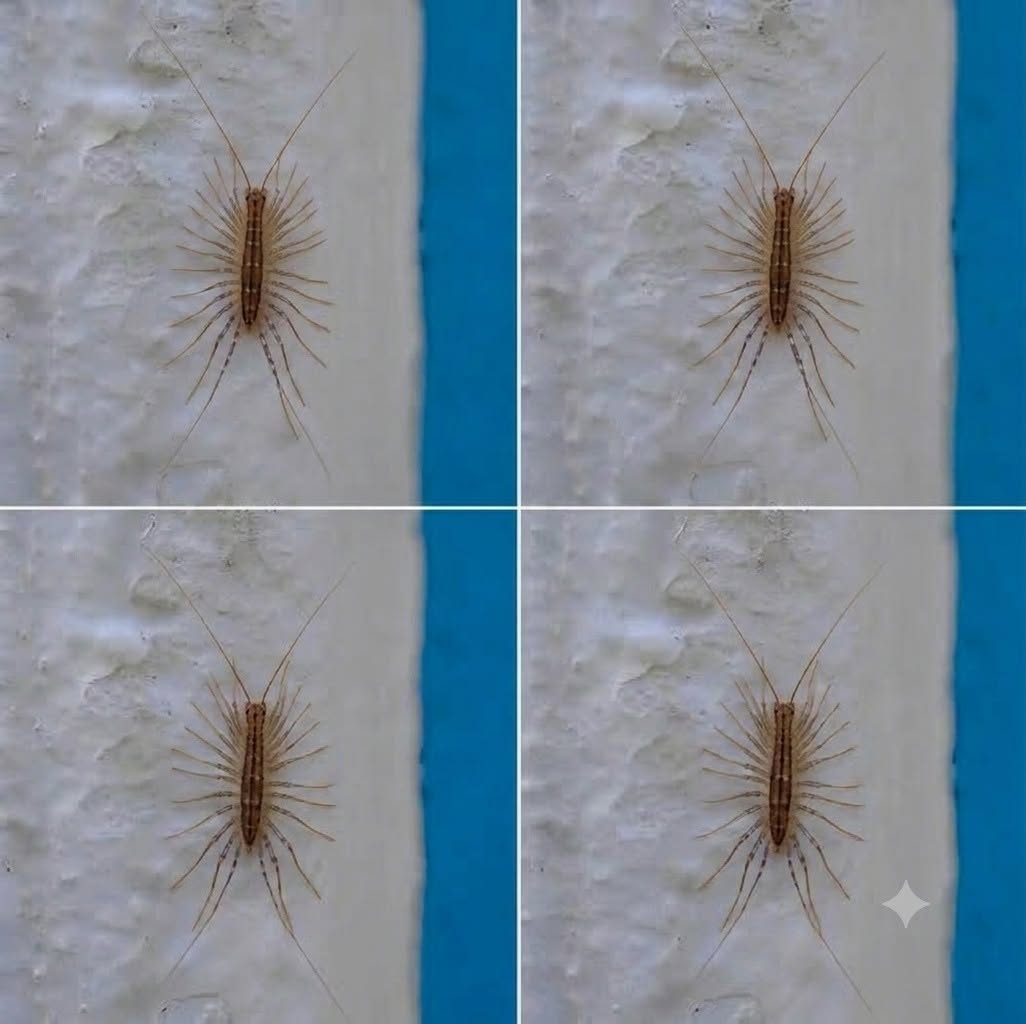
At first glance, this strange creature can look like something from a horror movie. 😨
With its extremely long legs, long antennae and incredibly fast movements, many people are shocked the first time they see one crawling across a bathroom wall or bedroom floor.
But there’s an important detail about this unusual creature that many people don’t know.
🕷️ What Is It?
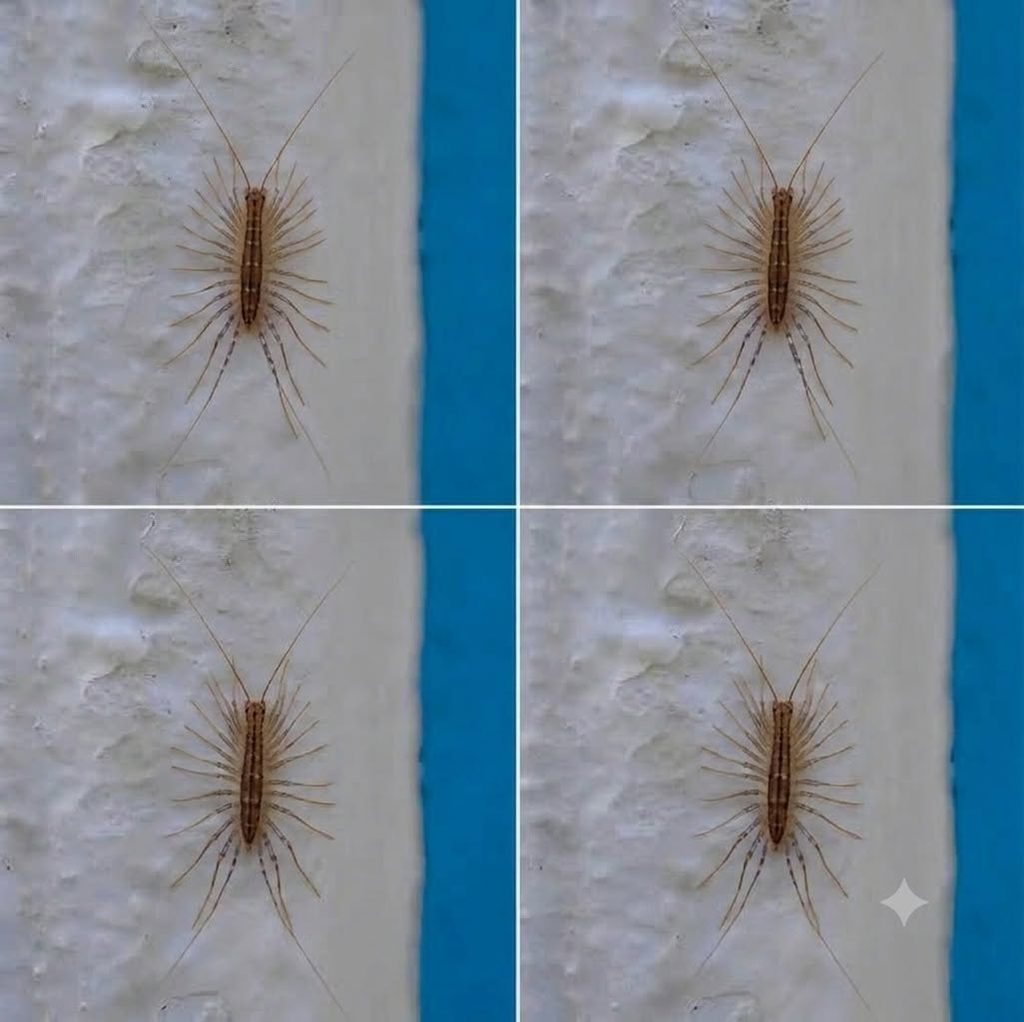
The creature in the photo appears to be a house centipede (Scutigera coleoptrata).
Despite its frightening appearance, house centipedes are generally considered low-risk to people and are actually predators that hunt other household pests. They have 15 pairs of long legs as adults, which makes them look much larger than their relatively small body. Penn State Extension
💧 Why Do They Appear Inside Homes?
Here’s the part homeowners should pay attention to.
House centipedes are strongly associated with damp, humid and cool areas.
They are commonly found around:
- 🚿 Bathrooms
- 🛁 Areas around sinks and tubs
- 🏠 Damp basements
- 📦 Dark closets and storage areas
- 🌧️ Other areas with excess moisture
So if you’re suddenly seeing several of them inside your home, it’s worth checking whether there’s a moisture problem somewhere. Extension de l’Université du Minnesota
🦗 They’re Actually Hunting Other Bugs
Here’s the surprising part.
House centipedes aren’t coming into your home looking for your food.
They’re predators.
They hunt small insects and other arthropods, including silverfish, cockroaches, spiders, flies and insect larvae. Penn State Extension
That means seeing a house centipede can sometimes indicate that other small pests are already present.
In other words, the centipede may not be the biggest problem.
It may be a sign that there’s a food source for it somewhere in the house. Penn State Extension
😱 Are House Centipedes Dangerous?
Despite their terrifying appearance, they’re generally not considered a significant health threat to people.
They can technically bite, but house centipedes have relatively small mouthparts and bites are uncommon. They generally avoid people rather than attack them. Entomology
Still, it’s best not to handle one with your bare hands.
🧹 What Should You Do If You Keep Finding Them?
Don’t immediately reach for insecticide.
First, investigate the environment.
1. Check for moisture 💧
Look underneath sinks, around pipes, near bathrooms and in basements or other damp areas.
2. Improve ventilation 🌬️
Bathrooms and other humid rooms should have adequate ventilation.
A dehumidifier can also help reduce indoor humidity. Penn State Extension
3. Look for other insects 🪳
If you frequently see house centipedes, check for silverfish, cockroaches, spiders and other small insects that may be providing them with food.
4. Seal cracks and openings 🏠
Check around doors, windows, pipes, foundations and other potential entry points.
5. Reduce clutter
Cardboard boxes and other stored materials can provide hiding places for centipedes and their prey. Penn State Extension
🤯 The Strange Truth About This “Scary” Creature
The next time you see one running across your bathroom floor, remember:
It may actually be helping you by eating other pests.
But if you’re seeing them frequently or in large numbers, don’t simply ignore it. Investigate the moisture levels and look for the insects they’re feeding on.
So the real warning isn’t necessarily:
“You have house centipedes.”
It may be:
“Your home could have moisture or another pest problem attracting them.” 👀
Have you ever found one of these in your home?
Did you know what it was, or did you think it was a giant spider? 😳👇