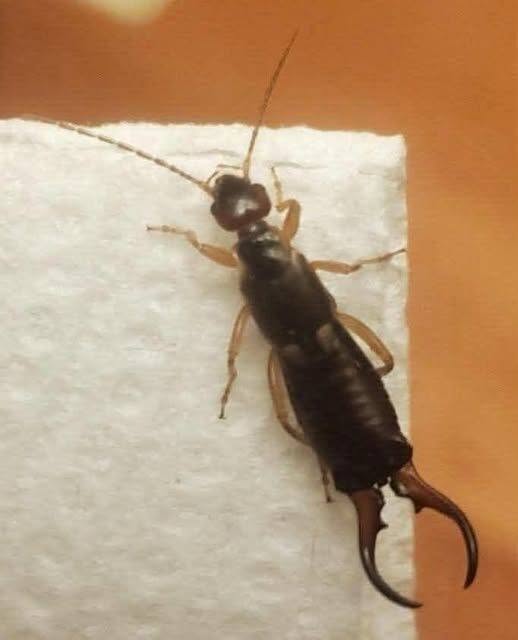
Alarmist posts regarding scary-looking household bugs frequently go viral across social media. The shared image displays a long, dark insect with impressive pincers extending from its abdomen, accompanied by a panicky caption: “SOS! My 7-year-old son got bitten by this. It looks terrifying. I showed the picture to my sister-in-law, who lives nearby, and she said she found similar bugs in her house too. Any ideas what they could be? Details are in the comments below.”
Despite the dramatic headline and persistent urban legends, this insect is neither venomous nor dangerous: it is a common earwig (from the insect order Dermaptera).
Here is the entomological breakdown of the earwig, an analysis of why these posts spark panic, and simple care steps if you experience a pinch:
1. The Problem: Social Media Panic and Household Bug Myths
Posts featuring encounters with intimidating insects leverage classic clickbait emotional triggers:
- Parental Panic (Clickbait): Claiming a 7-year-old child was “bitten” by a terrifying creature (“My 7-year-old son got bitten by this”) triggers immediate empathy, worry, and rapid social sharing.
- Information Retention Strategy: Directing readers to the comment section for the full story (“Details are in the comments below”) artificially inflates the post’s comment count and engagement metrics.
- Persistency of Urban Legends: The name “earwig” comes from an old myth that these insects crawl into the ears of sleeping humans to burrow into their brains or lay eggs, which is completely false.
2. Explanation: What Is an Earwig and Are They Dangerous?
From an entomological and medical standpoint, earwigs are harmless to humans and pets:
- Purpose of the Pincers (CERCI): The prominent forceps at the tail end of an earwig are called cerci. They are not venomous stingers; earwigs use them for defense against other small insects, mating displays, and folding their delicate wings.
- Bite vs. Pinch: Earwigs do not possess venom glands, nor do they bite with toxic mouthparts. If handled roughly or trapped against skin, they may use their tail pincers to pinch, but the force is weak and rarely breaks the skin.
- Beneficial Garden Helpers: Earwigs are actually helpful pest controllers outdoors. At night, they feed on garden pests like aphids, mites, insect larvae, and decaying plant material.
3. Advice & Steps: What to Do If Pinched by an Earwig
If you or a child experience a minor pinch from an earwig, follow these straightforward steps:
1. Reassure the Child and Wash the Area
- Calmly explain that the insect is harmless and cannot sting or inject venom. Wash the affected skin with mild soap and warm water.
2. Apply a Mild Antiseptic
- Apply a standard disinfectant or antiseptic wipe. While earwigs do not transmit human diseases, keeping the skin clean prevents minor irritation.
3. Manage Earwigs Indoors Without Harsh Chemicals
- If earwigs wander inside, sweep them up or pick them up with a damp cloth to move them back outside to the garden. Seal gaps around doors or basement windows, and reduce excess moisture near foundations.
Disclaimer & Safety Guidelines
This article is provided for general educational, entomological literacy, and fact-checking purposes. Viral social media alerts about insect attacks frequently exaggerate minor defensive behaviors. If you notice signs of an unexpected allergic reaction (severe swelling or intense hives) or remain unsure about an insect bite, consult a qualified healthcare professional.