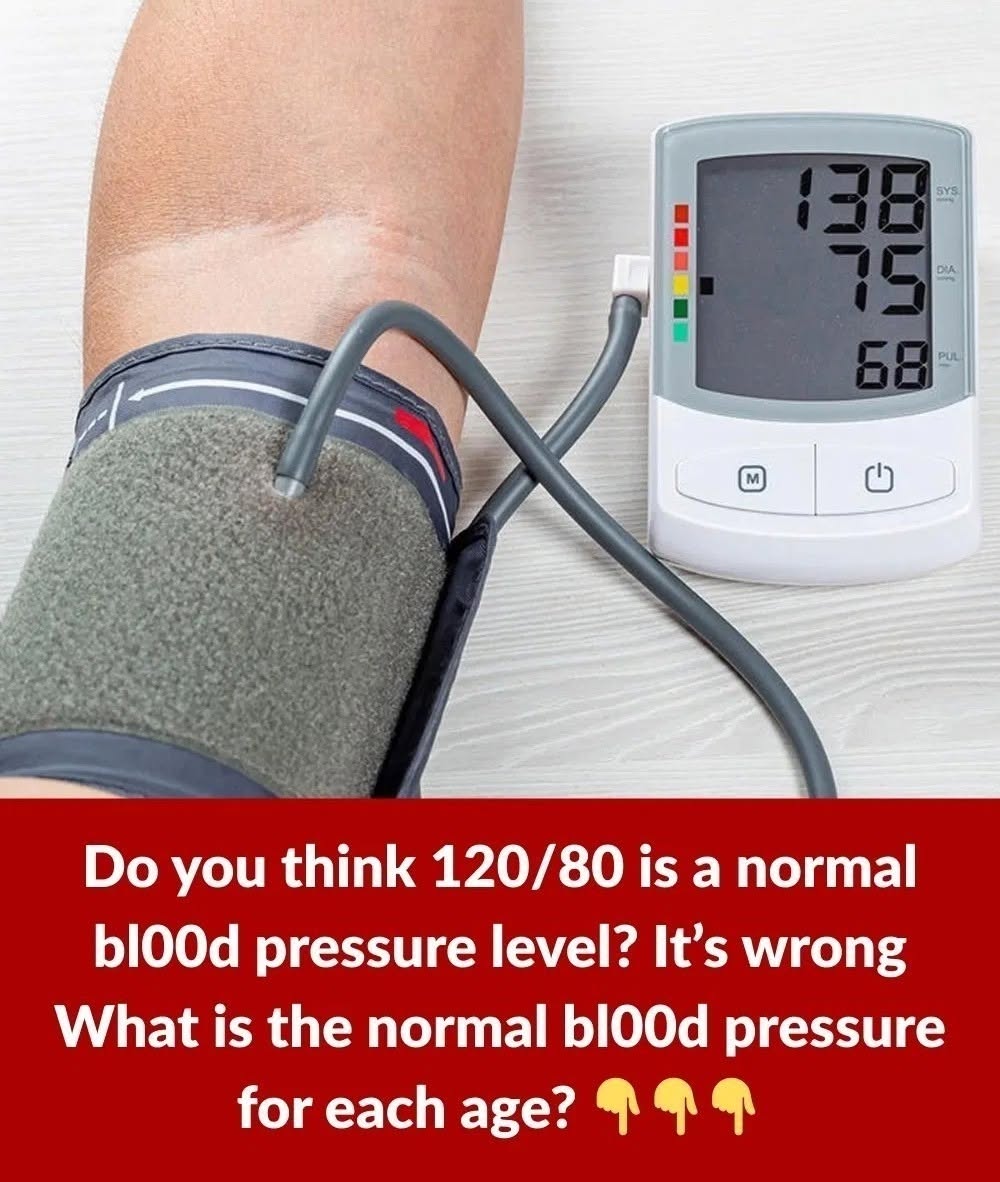
A common internet claim says that 120/80 is “not normal” and that everyone should have a different blood-pressure target depending on age.
That’s misleading.
For most adults, blood-pressure categories are not simply changed because someone is older. A reading of 120/80 mmHg is close to the healthy range, although under current American Heart Association categories, 120 systolic is classified as elevated, while 80 diastolic reaches the Stage 1 hypertension threshold.
🩺 Adults: How to Read Your Numbers
| Blood pressure | Category |
|---|---|
| Below 120/80 | Normal |
| 120–129 and below 80 | Elevated |
| 130–139 or 80–89 | Stage 1 hypertension |
| 140 or higher or 90 or higher | Stage 2 hypertension |
| Above 180 and/or 120 | Severe hypertension |
The important detail is “and/or.” If either number falls into a higher category, the higher category applies. www.heart.org
👶 What About Children?
Children are different.
Blood pressure in children is interpreted according to age, sex and height, rather than using the adult chart alone. That’s why there isn’t one universal “normal BP” number for every child.
👨🦱 What About Young Adults?
For adults, the same general categories apply.
A 25-year-old and a 55-year-old don’t automatically need completely different “normal” blood-pressure numbers simply because of their age.
👵 What About Older Adults?
Being older doesn’t mean that high blood pressure becomes automatically normal.
Older adults still benefit from having their blood pressure assessed and managed appropriately. The exact treatment target can depend on overall health, medications, other medical conditions and individual circumstances.
⚠️ One Reading Doesn’t Diagnose Hypertension
Blood pressure naturally changes throughout the day.
Stress, exercise, caffeine, pain, smoking and even talking during the measurement can temporarily raise it.
For a more reliable measurement:
- Sit quietly for several minutes beforehand.
- Keep your back supported.
- Keep both feet flat on the floor.
- Support your arm around heart level.
- Don’t talk during the measurement.
- Take repeated readings rather than relying on one unusual number. www.heart.org
🚨 When Is Blood Pressure Dangerous?
A reading above 180/120 mmHg is considered severe.
If it remains that high after repeating the measurement, medical attention is needed. If it is accompanied by symptoms such as chest pain, shortness of breath, weakness or numbness, vision changes, severe back pain, or difficulty speaking, it can be a medical emergency. www.heart.org
❤️ The Bottom Line
There is no single blood-pressure chart where every age has its own “perfect” number.
For most adults, less than 120/80 mmHg is considered normal, while 120–129 systolic with a diastolic below 80 is considered elevated.
And remember: one blood-pressure reading doesn’t tell the whole story. Repeated, properly measured readings are much more useful.