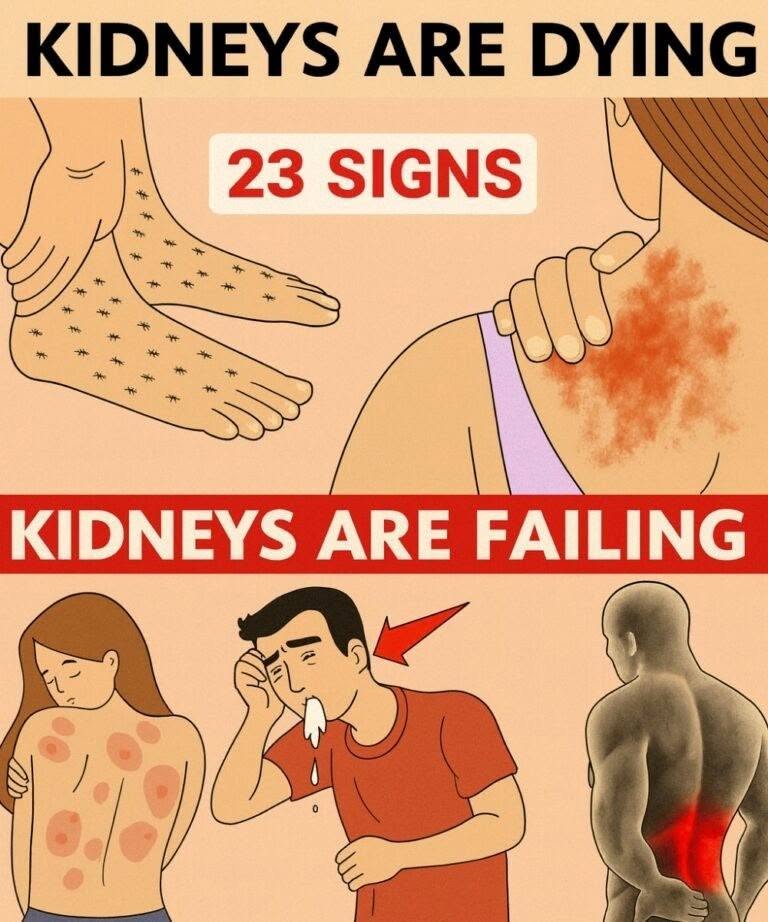
The viral image makes a dramatic claim: “KIDNEYS ARE DYING.” But kidney disease usually doesn’t announce itself with 23 obvious symptoms. In fact, early chronic kidney disease often causes no symptoms at all and may only be discovered through blood and urine tests. Institut National du Diabète
Still, as kidney function declines, several warning signs can appear.
🩺 23 Signs That May Occur With Kidney Problems
1. Swollen ankles, feet or legs
Fluid can build up when the kidneys aren’t removing enough salt and water.
2. Puffy eyes
Persistent swelling around the eyes can sometimes occur when protein is leaking into the urine.
3. Foamy urine
Persistent excessive foam may indicate protein in the urine.
4. Blood in the urine
Pink, red or cola-colored urine should be medically evaluated.
5. Urinating more often
Especially needing to urinate repeatedly during the night.
6. Urinating much less
A significant decrease in urine output can occur with advanced kidney problems.
7. Constant tiredness
Advanced kidney disease can contribute to anemia and the buildup of waste products.
8. Difficulty concentrating
Reduced mental sharpness can occur when kidney disease becomes advanced.
9. Trouble sleeping
Kidney disease is associated with sleep problems, although insomnia has many other possible causes.
10. Persistent itching
Severe generalized itching can occur in advanced kidney disease.
11. Dry skin
Dry, itchy skin can accompany declining kidney function.
12. Muscle cramps
Changes in fluids and minerals can contribute to cramping.
13. Numbness or weakness
Advanced kidney disease can sometimes cause numbness, weakness or other nerve-related symptoms.
14. Loss of appetite
Waste buildup can affect appetite and the way food tastes.
15. Nausea or vomiting
These symptoms can occur as kidney function becomes severely reduced.
16. Unexplained weight loss
Loss of appetite and advanced illness can lead to weight loss.
17. Shortness of breath
Fluid accumulation or anemia associated with kidney disease can contribute to breathing difficulties.
18. Headaches
Headaches can occur in people with kidney disease, although they have many possible causes.
19. High blood pressure that’s difficult to control
Kidneys and blood pressure are closely connected, and kidney disease can make hypertension harder to manage.
20. Muscle weakness
Changes in electrolytes and anemia can contribute to weakness.
21. Changes in taste
Some people with advanced kidney disease experience altered or unpleasant taste.
22. Confusion or memory problems
These are generally associated with advanced kidney failure rather than early kidney disease.
23. Little or no urine
This can be a serious sign of severely reduced kidney function and requires prompt medical attention.
These symptoms are documented in kidney disease, particularly in more advanced stages, but none of them by itself proves that the kidneys are failing. Many can also occur with other conditions. Institut National du Diabète
⚠️ The biggest misconception
Having itchy skin, back pain, tiredness, a rash or swollen legs does not automatically mean your kidneys are “dying.”
The image is also misleading because kidney disease can be almost completely silent in its early stages. Waiting for symptoms is therefore not a reliable way to detect it. Institut National du Diabète
🧪 How do you actually check your kidneys?
The most useful evaluation generally includes:
- Blood creatinine and estimated GFR (eGFR)
- Urine testing
- Urine albumin-to-creatinine ratio (UACR)
- Blood pressure measurement
These tests can detect kidney problems before obvious symptoms appear. Institut National du Diabète
People with diabetes, high blood pressure, heart disease, obesity, or a family history of kidney failure should be particularly attentive to kidney screening. Institut National du Diabète
🚨 Don’t ignore these symptoms
Seek urgent medical attention for very little or no urine, severe shortness of breath, chest pain, severe confusion, or rapidly worsening swelling, particularly if these symptoms appear suddenly.
Your kidneys can be significantly damaged before you feel anything. The best protection isn’t trying to recognize 23 symptoms—it’s detecting kidney disease early with the right tests.