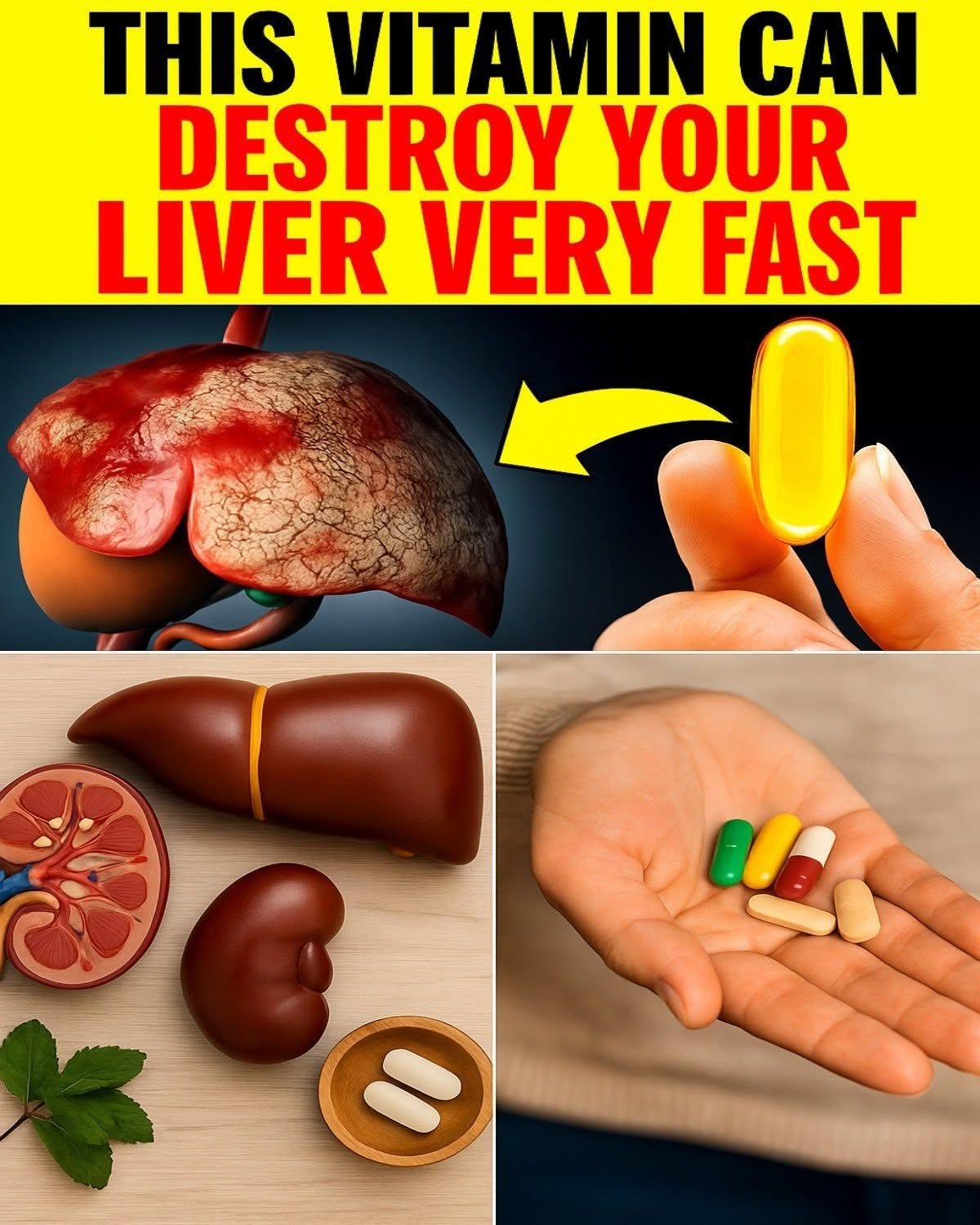
A dramatic viral image warns that certain vitamins and supplements can damage the liver and kidneys.
There is some truth behind the warning—but the important word is misused.
Most vitamins are safe when taken at recommended amounts. The concern is mainly with very high doses, prolonged unnecessary supplementation, contaminated or poorly regulated products, and combinations that aren’t appropriate for a person’s medical condition. CNIB
1️⃣ Vitamin A
Vitamin A is one of the clearest examples.
Because the body stores excess vitamin A, high doses taken regularly can accumulate and cause liver injury. Severe toxicity can also cause headaches, nausea, dizziness, muscle and joint pain, and other serious effects. OpenDataShare
2️⃣ Niacin (Vitamin B3)
Niacin is important for normal metabolism, but high-dose supplements—especially doses used for medical purposes—can cause liver toxicity.
The risk depends heavily on the dose and formulation, so high-dose niacin shouldn’t be taken casually. OpenDataShare
3️⃣ Vitamin D
Vitamin D is essential, but more isn’t necessarily better.
Excessive supplementation can cause very high calcium levels, which may lead to excessive thirst, frequent urination, nausea, weakness, kidney stones and, in extreme cases, kidney failure. OpenDataShare
4️⃣ Vitamin C
Vitamin C is generally considered safe, but very large supplemental doses can cause digestive problems and may increase urinary oxalate.
This can be particularly relevant for people with certain kidney conditions or a history of kidney stones. OpenDataShare
5️⃣ Calcium Supplements
Calcium isn’t a vitamin, but it’s frequently included in supplement routines.
Taking excessive supplemental calcium can contribute to high calcium levels and kidney problems, and some research suggests higher supplemental intakes may increase kidney-stone risk. OpenDataShare
6️⃣ Green Tea Extract 🍵
This one deserves special attention.
Drinking ordinary green tea is not the same as taking concentrated green-tea extract.
Certain concentrated extracts used in weight-loss and dietary supplements have been linked to rare cases of significant liver injury, including acute liver failure. CNIB
7️⃣ Herbal & “Detox” Supplements 🌿
“Natural” doesn’t automatically mean safe.
Some herbal products and multi-ingredient supplements have been associated with liver injury. The problem can be especially difficult to identify because products may contain numerous ingredients or inconsistent amounts. PubMed
8️⃣ High-Dose Vitamin E
Vitamin E is an essential nutrient, but taking large supplemental doses isn’t automatically beneficial.
High-dose supplements can also interact with medications and may increase certain health risks, which is why supplementation should have a reason rather than simply being taken “just in case.”
9️⃣ Multiple Supplements at the Same Time
Sometimes the biggest problem isn’t one vitamin—it’s the combination.
A person may unknowingly take vitamin D in a multivitamin, another vitamin D supplement, calcium, and a fortified product at the same time.
The total daily intake can become much higher than expected.
🧠 The Most Important Rule
Don’t confuse “vitamins can be toxic in excessive amounts” with “vitamins are dangerous.”
Your body needs vitamins.
The goal is to get adequate amounts—not the highest possible dose.
If you have kidney disease, liver disease, take several medications, are pregnant, or are considering high-dose supplements, it’s especially important to discuss them with a doctor or pharmacist. People with chronic kidney disease may have particular problems handling excess amounts of certain vitamins and minerals. National Kidney Foundation
🚨 Signs You Shouldn’t Ignore
If you are taking supplements and develop yellowing of the skin or eyes, dark urine, severe nausea or vomiting, unusual weakness, confusion, severe abdominal pain, or major changes in urination, seek medical advice rather than simply adding another supplement.
💊 THE BOTTOM LINE
There is no need to fear ordinary vitamin use.
The real danger comes from excessive doses, unnecessary long-term supplementation, interactions, and poorly regulated products.
Before taking a supplement, ask one simple question:
“Do I actually need this—and what dose is appropriate for me?”
That question can be much more valuable than any viral “miracle vitamin” post. ❤️
#Vitamins #Supplements #LiverHealth #KidneyHealth #VitaminSafety #HealthFacts #Nutrition #MedicalFacts #HealthyLiving