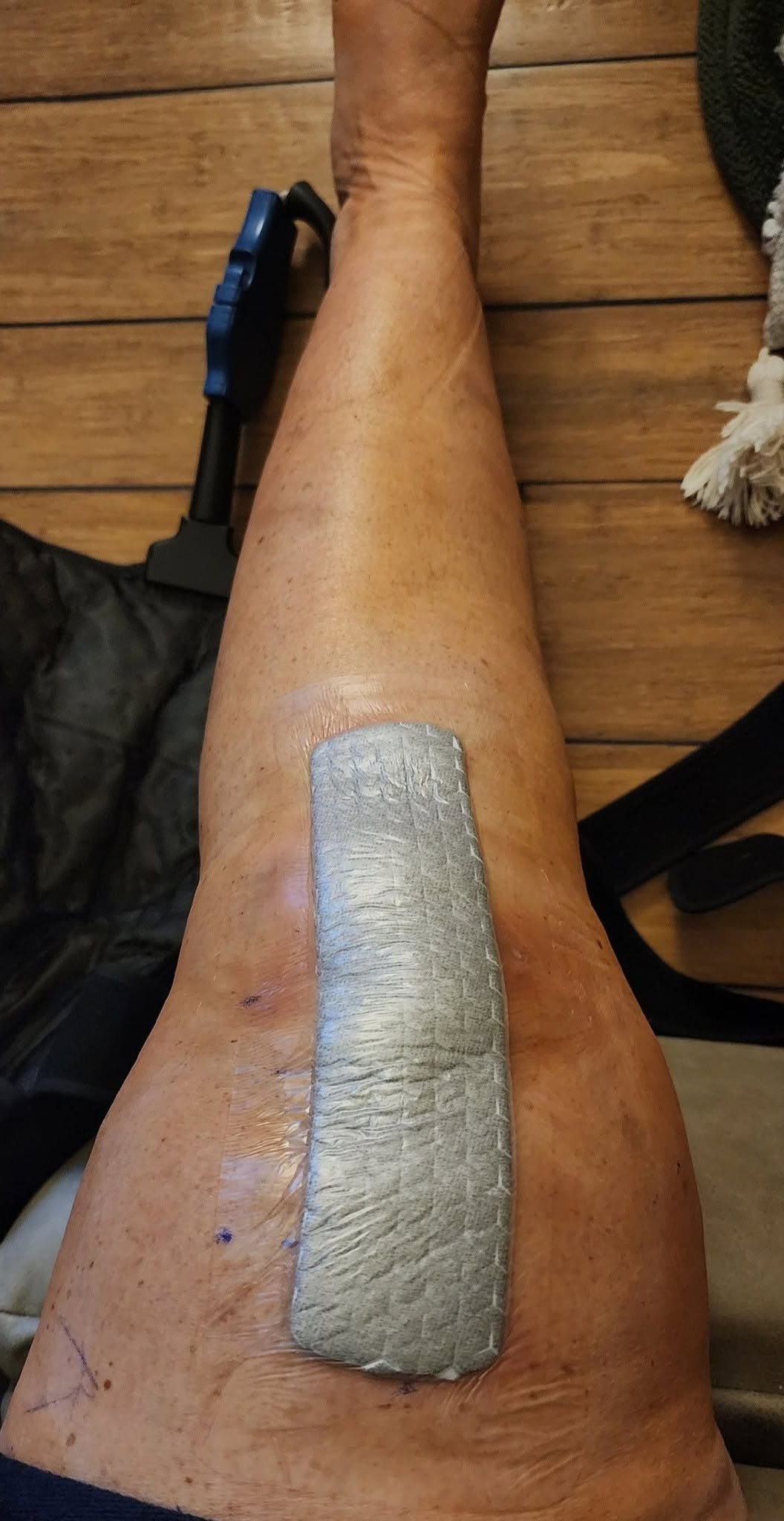
Preparing for surgery doesn’t always start on the operating table.
For people preparing for a total knee replacement (TKR), strengthening the muscles around the knee before surgery—often called prehabilitation or “pre-hab”—may help them enter recovery in better physical condition.
One patient recently shared her experience after knee replacement, explaining that she used her e-bike about three times a week for 1–1.5 hours, making each ride challenging enough to function as a workout.
Just eight days after surgery, she reported reaching 0° extension and 90° flexion, while already being able to move around her home and climb into her truck.
She believes the cycling helped strengthen her quadriceps before surgery.
🚴 WHY QUADRICEPS STRENGTH MATTERS
The quadriceps are among the most important muscle groups for everyday movement after knee replacement.
They help with:
- Standing up from a chair
- Walking
- Climbing stairs
- Getting in and out of a vehicle
- Maintaining stability
- Supporting the knee during movement
And weakness after TKR is common. Research shows that quadriceps strength can drop substantially during the early period following surgery and may take months to recover.
That makes the idea of entering surgery with stronger muscles appealing.
💪 WHAT DOES THE RESEARCH SAY?
Studies have found evidence that preoperative exercise can improve physical function and strength before knee replacement, and some research suggests benefits during the early postoperative period.
However, the evidence isn’t completely consistent.
Recent reviews have found that prehabilitation may improve short-term function and, in some studies, quadriceps strength or recovery. Other reviews have found that the long-term advantages are less certain.
So the message isn’t that pre-hab guarantees a faster recovery.
Instead, it’s that being as physically prepared as safely possible may give some patients a better starting point for rehabilitation.
🪑 DON’T FORGET YOUR ARMS
One interesting point from the patient’s experience is easy to overlook.
After knee replacement, getting up from a chair can be difficult—not only because of the legs, but because you may temporarily need your upper body to help support and lift yourself.
That’s why overall conditioning can be useful.
Depending on the person’s abilities and medical situation, preparation may include:
💪 Upper-body strengthening
🦵 Quadriceps strengthening
🚶 Walking or other appropriate cardiovascular activity
⚖️ Balance exercises
🧘 Flexibility and range-of-motion work
A physical therapist can help determine which exercises are appropriate before surgery.
⚠️ BUT MORE EXERCISE ISN’T ALWAYS BETTER
Someone preparing for knee replacement shouldn’t suddenly start an intense workout program without professional guidance.
The safest program depends on factors such as:
- Current fitness level
- Knee pain
- Range of motion
- Body weight
- Other medical conditions
- Balance and fall risk
- The type and timing of surgery
The goal is smart preparation, not pushing through severe pain.
🏥 THE FIRST DAYS AFTER SURGERY
The numbers mentioned in this personal story—0° extension and 90° flexion on postoperative day 8—are individual results.
They should not be treated as a universal target that every TKR patient must achieve by day eight.
Recovery varies considerably from person to person.
Age, strength, mobility before surgery, surgical factors, pain control and rehabilitation all influence the process.
❤️ THE BIGGER LESSON
The most valuable message from this experience isn’t necessarily “ride an e-bike.”
It’s:
Prepare your body before surgery whenever your healthcare team says it is safe to do so.
Building strength, maintaining mobility and improving general fitness can be a useful part of preparing for the rehabilitation journey.
And after surgery, following the rehabilitation plan and listening to your surgeon and physical therapist remains essential.
🦵 Surgery is only one part of the journey.
The work you do before and after the operation can both matter.
Would you consider doing “pre-hab” before a knee replacement? 🚴♀️💪
#KneeReplacement #TKR #Prehab #KneeSurgery #PhysicalTherapy #Rehabilitation #KneeHealth #Exercise #FitnessAfter60 #HealthyAging