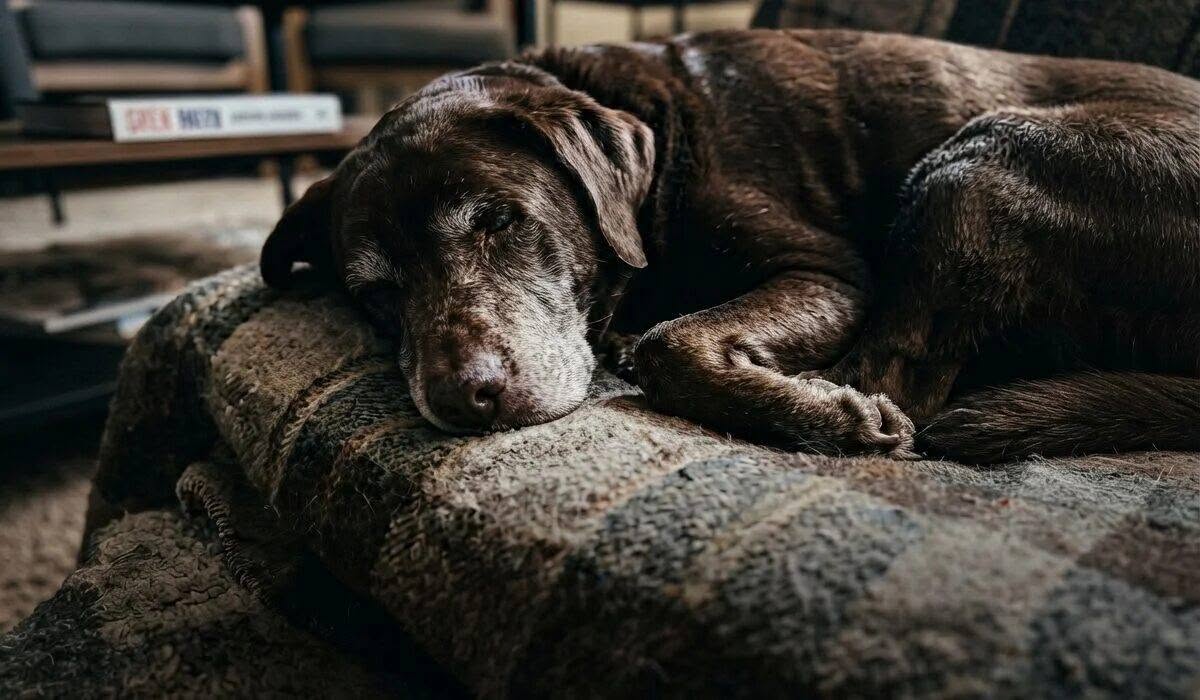
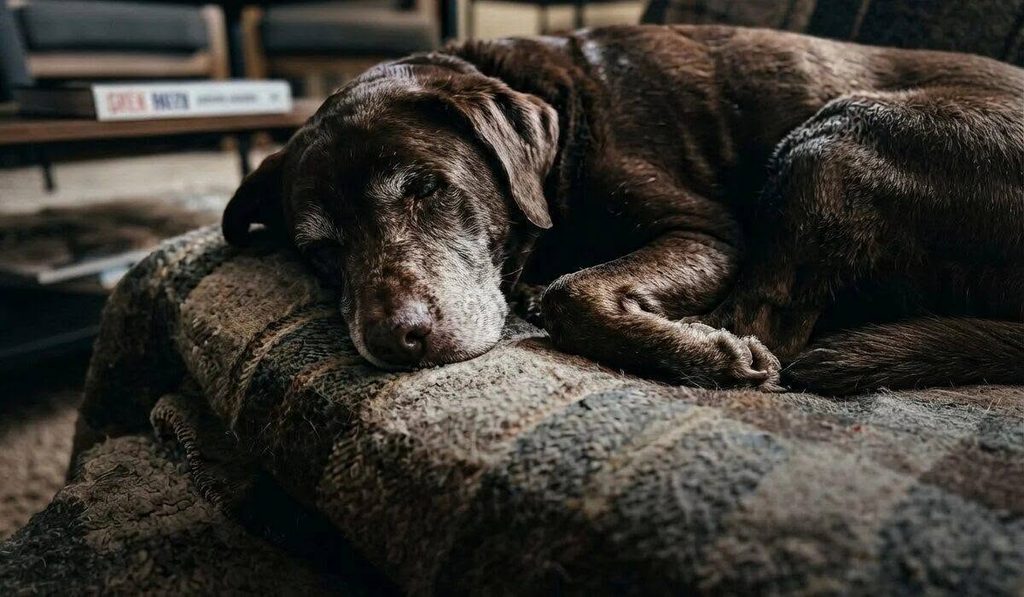
He’s family. ❤️
That’s why noticing changes in an older or seriously ill dog can be heartbreaking. You may start wondering:
“Is this just aging, or is my dog telling me that something is seriously wrong?”
There isn’t one single sign that can tell you a dog is dying. Many of the same symptoms can also be caused by treatable illnesses, so a veterinarian should evaluate significant changes.
However, when several changes appear together and your dog’s quality of life is declining, they may indicate that it’s time to focus more strongly on comfort and end-of-life care.
🐾 1. YOUR DOG SLEEPS MUCH MORE
Older dogs naturally sleep more than younger dogs.
But a major increase in sleeping—especially when your dog no longer wants to participate in normal activities—can be a sign that something has changed.
You may notice that your dog spends most of the day lying down and has very little energy for walks, play or interaction.
🍖 2. LOSS OF APPETITE
A dog approaching the final stages of serious illness may begin eating less or refusing food altogether.
You might notice:
🔹 Leaving food untouched
🔹 Losing interest in favorite treats
🔹 Needing encouragement to eat
🔹 Losing weight or muscle
A sudden loss of appetite can also have many treatable causes, so don’t automatically assume it means your dog is dying.
💧 3. CHANGES IN DRINKING
Changes in thirst can occur with many illnesses.
Some dogs may drink much less, while others may suddenly drink much more.
If your dog stops drinking or cannot keep water down, dehydration can become serious.
🚶 4. DIFFICULTY STANDING OR WALKING
One of the most noticeable signs of declining quality of life is loss of mobility.
Your dog may:
🐾 Struggle to stand
🐾 Slip on floors
🐾 Have difficulty climbing stairs
🐾 Walk only very short distances
🐾 Need assistance getting outside
If movement becomes painful or exhausting, everyday activities can become increasingly difficult.
😔 5. LOSING INTEREST IN THE THINGS HE LOVES
This can be one of the most emotionally difficult changes to notice.
A dog who once became excited about:
❤️ Seeing you
🦴 Getting treats
🎾 Playing
🌳 Going outside
🐕 Going for walks
may suddenly stop showing interest.
When a dog consistently loses interest in activities that previously brought him joy, it can be an important sign that his quality of life is changing.
🫂 6. WITHDRAWING FROM FAMILY
Some dogs become quieter and spend more time alone.
They may stop following their owners around the house or may prefer to remain in one particular place.
Others may become unusually clingy and want to stay close to their family.
Both behavioral changes can occur when a dog is experiencing discomfort, illness, anxiety or cognitive changes.
😣 7. SIGNS OF PAIN OR DISCOMFORT
Dogs don’t always cry when they’re hurting.
Instead, pain may appear as:
🔸 Restlessness
🔸 Trembling
🔸 Panting while resting
🔸 Difficulty getting comfortable
🔸 Guarding part of the body
🔸 Reluctance to be touched
🔸 Repeatedly changing positions
If your dog’s pain is becoming difficult to control, speak with a veterinarian about pain-management options.
🧠 8. CONFUSION OR DISORIENTATION
Some elderly dogs develop cognitive changes.
You may notice your dog:
🔹 Staring at walls
🔹 Becoming confused in familiar surroundings
🔹 Getting stuck in corners
🔹 Acting differently at night
🔹 Forgetting familiar routines
These changes don’t necessarily mean death is approaching, but they can significantly affect quality of life.
🚽 9. TROUBLE USING THE BATHROOM
A dog who was previously house-trained may begin having accidents.
He may also struggle to get into the proper position to urinate or defecate.
This can happen because of weakness, pain, neurological disease, cognitive decline or other medical problems.
Keeping your dog clean and comfortable becomes especially important at this stage.
🫁 10. CHANGES IN BREATHING
Breathing changes can be particularly concerning.
Watch for:
⚠️ Increased breathing effort
⚠️ Very shallow breathing
⚠️ Persistent coughing
⚠️ Difficulty catching the breath
⚠️ Unusual breathing patterns while resting
🚨 Difficulty breathing is an emergency.
If your dog is struggling to breathe, collapsing or showing severe distress, seek veterinary care immediately rather than waiting to see whether the symptoms disappear.
💔 11. THERE ARE MORE BAD DAYS THAN GOOD DAYS
This may be one of the most useful ways to think about quality of life.
Instead of focusing on one difficult day, look at the overall pattern.
Ask yourself:
Does my dog still have comfortable, happy moments?
Does he still enjoy food, affection, being outside or spending time with the family?
Or are pain, anxiety, weakness and discomfort becoming the majority of his days?
Veterinary guidance commonly recommends considering whether your pet has more bad days than good days when evaluating end-of-life decisions.
❤️ HOW CAN YOU HELP YOUR DOG?
If your dog is seriously ill or approaching the end of his life, the goal doesn’t have to be doing everything possible to prolong life at any cost.
The goal can be comfort, dignity and love.
🛏️ Make his resting area comfortable
Provide soft bedding in a quiet, easily accessible location.
For dogs with mobility problems, avoid slippery floors and unnecessary stairs.
💧 Keep water easily accessible
Place water close to where your dog spends most of his time.
🍲 Follow veterinary nutritional advice
If appetite is declining, ask your veterinarian what foods or feeding strategies are appropriate for your dog’s specific condition.
💊 Control pain
Never give your dog human painkillers without veterinary advice.
Some medications that are safe for humans can be dangerous or even deadly to dogs.
🫂 Stay close
Your voice, smell and presence can provide enormous comfort.
Sometimes the most important thing you can give an aging dog is simply your time.
🩺 WHEN SHOULD YOU TALK TO A VETERINARIAN?
Don’t wait until your dog is in a crisis.
If you notice several changes happening at the same time—especially loss of appetite, significant weakness, persistent pain, breathing problems or loss of mobility—schedule a veterinary evaluation.
A veterinarian can determine whether the changes are caused by an illness that can still be treated or whether your dog’s condition is progressing.
They can also discuss palliative or hospice care, pain control and, when appropriate, humane euthanasia.
🌈 MAKING THE HARDEST DECISION
Choosing when to say goodbye to a beloved dog can be one of the most painful decisions an owner ever faces.
There isn’t a universal number of symptoms that tells you it’s time.
Instead, the question is:
“Is my dog still comfortable, and is he still able to experience more good moments than suffering?”
Your veterinarian can help you answer that question based on your dog’s medical condition.
And remember:
Choosing humane euthanasia when suffering can no longer be controlled isn’t giving up on your dog.
For some seriously ill pets, it can be the final act of love—preventing unnecessary pain and allowing them to pass peacefully and with dignity. ❤️🐾
🐕 THE MOST IMPORTANT THING
If your dog is getting older, don’t wait for the final days to start paying attention.
Take photos.
Write down his good days and bad days.
Notice his appetite, mobility, comfort and happiness.
And most importantly, spend time with him.
Because eventually, the walks may become shorter, the naps may become longer, and the moments together may become even more precious.
❤️ THEY GIVE US YEARS OF LOVE.
The least we can do is make their final chapter as comfortable and peaceful as possible.
💬 Have you ever had to make this difficult decision for a beloved dog? What helped you through it? 🐾❤️
#Dogs #DogHealth #SeniorDogs #DogLovers #PetCare #DogCare #PetHealth #SeniorDogCare #AnimalLovers #DogsAreFamily #PetParents #DogLife