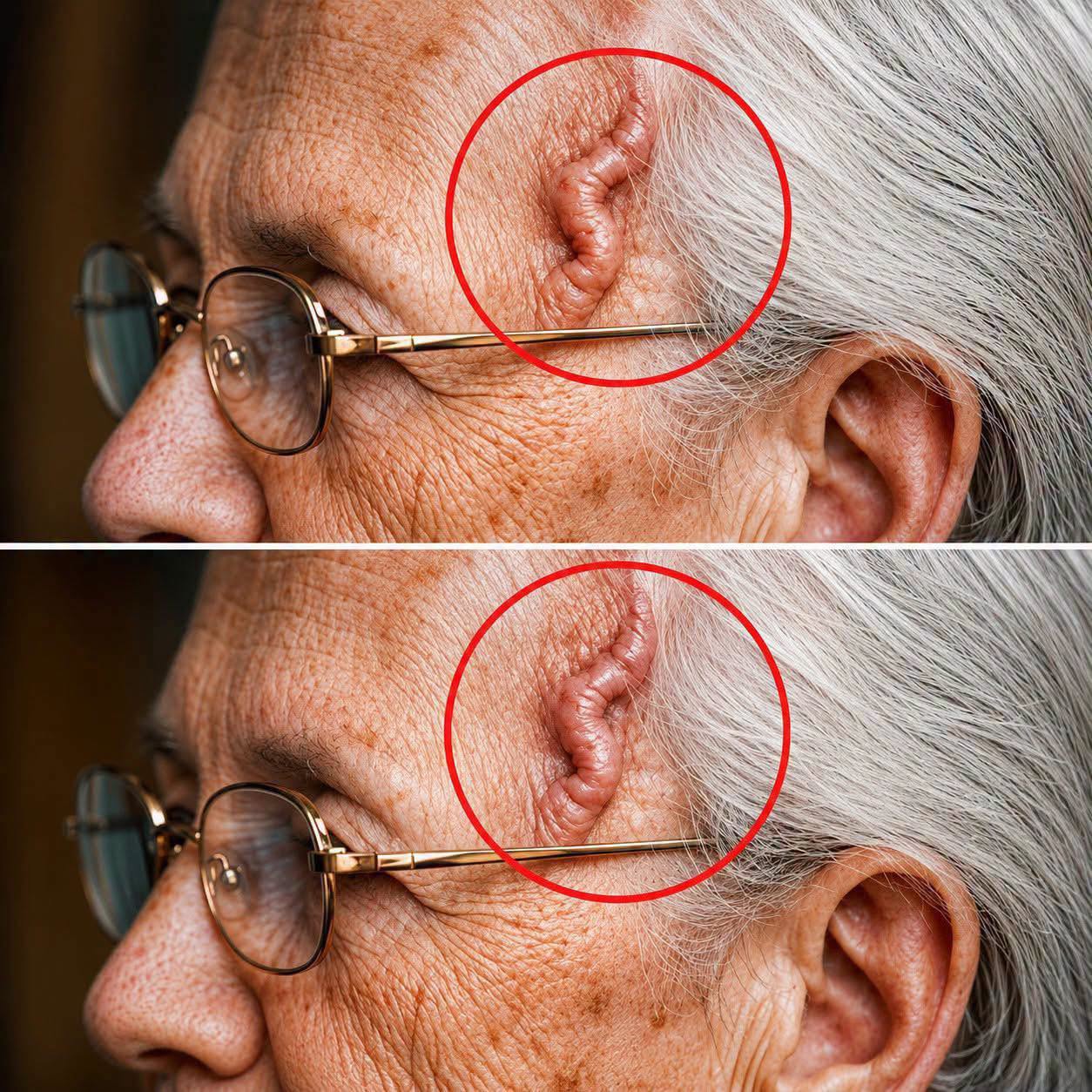
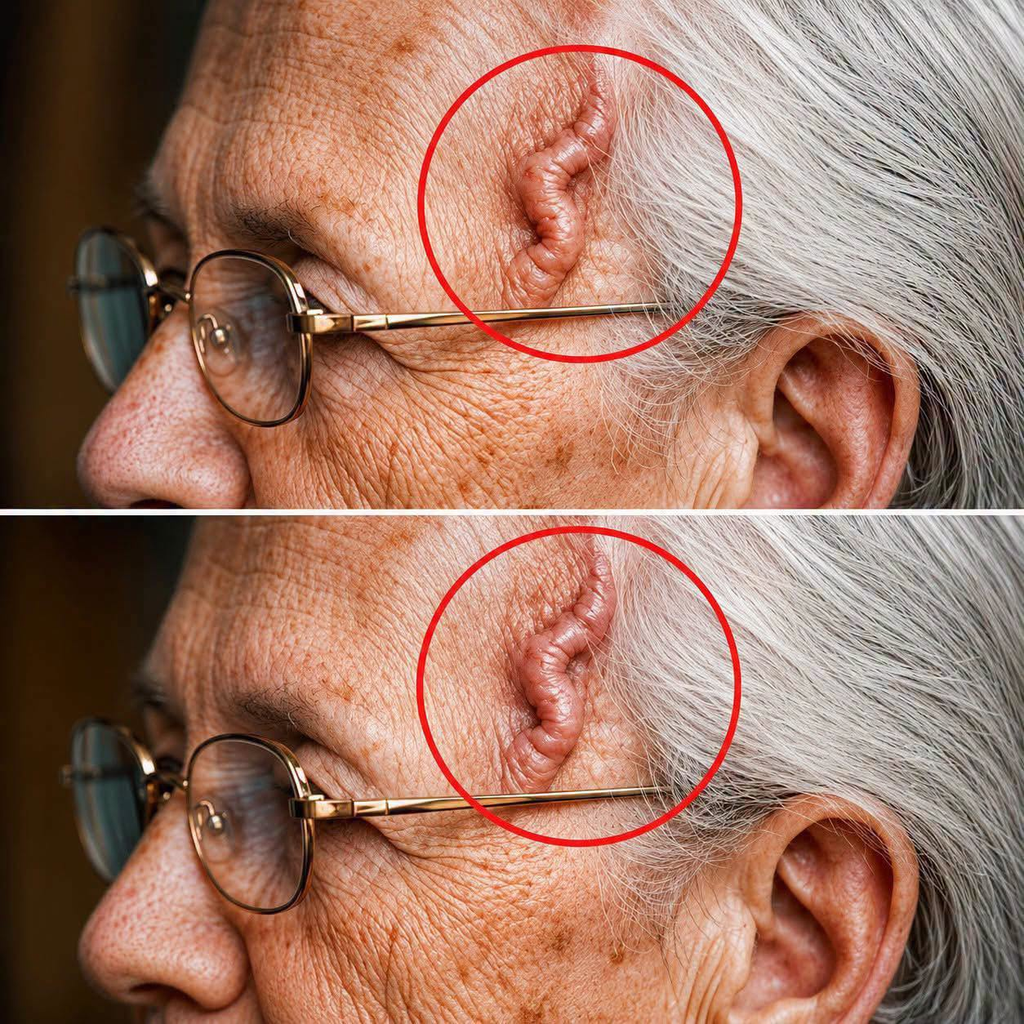
You may have seen this image circulating online with a dramatic caption claiming that a crease in the earlobe is one of the first signs of heart disease.
There is actually a medical observation behind the claim—but the viral version leaves out some very important context.
🔎 What is the crease?
The diagonal line running across the earlobe is known as Frank’s sign, or a diagonal earlobe crease.
Researchers have studied this physical finding for decades because several studies have found an association between the crease and coronary artery disease and other vascular conditions. PubMed
❤️ Does having it mean you have heart disease?
No.
This is the most important point.
A person can have an earlobe crease and not have heart disease. The crease is not a diagnostic test and should not be used by itself to determine whether someone has blocked arteries.
In fact, research has found that the association can be affected by factors such as age, because earlobe creases become relatively common as people get older. Some population research has found that the relationship with peripheral artery disease was not statistically significant after accounting for age. PubMed
🤔 Why has it attracted so much attention?
The connection is still being studied.
Some research has reported that people with a diagonal earlobe crease are more likely to have coronary artery disease, while other studies have questioned how specific or useful the sign actually is. PubMed
A 2026 medical commentary also discusses Frank’s sign in the context of cardiovascular disease while raising concerns about over-interpreting incidental skin findings. PubMed
So it’s better described as a possible clinical clue that has been studied, rather than a definite warning sign.
🩺 What should you actually pay attention to?
Your overall cardiovascular risk is much more important than the appearance of your earlobe.
Important risk factors include:
- High blood pressure
- High cholesterol
- Diabetes
- Smoking
- Excess weight
- Physical inactivity
- Family history of cardiovascular disease
- Increasing age
If you have several risk factors, discussing them with a healthcare professional is much more useful than trying to diagnose yourself from an earlobe crease.
🚨 Don’t ignore actual heart symptoms
Seek urgent medical attention for symptoms such as chest pressure or pain, shortness of breath, cold sweating, nausea, or pain spreading to the arm, jaw, back or shoulder.
Those symptoms matter far more than whether your earlobe has a crease.
🧠 The bottom line
Frank’s sign is real, but the viral claim is exaggerated.
An earlobe crease may be associated with cardiovascular disease in some studies, but it does not prove that someone has heart disease and cannot diagnose blocked arteries by itself.
So don’t panic if you notice one. ❤️
Have you ever noticed this crease on your own ear or someone else’s? 👂👇