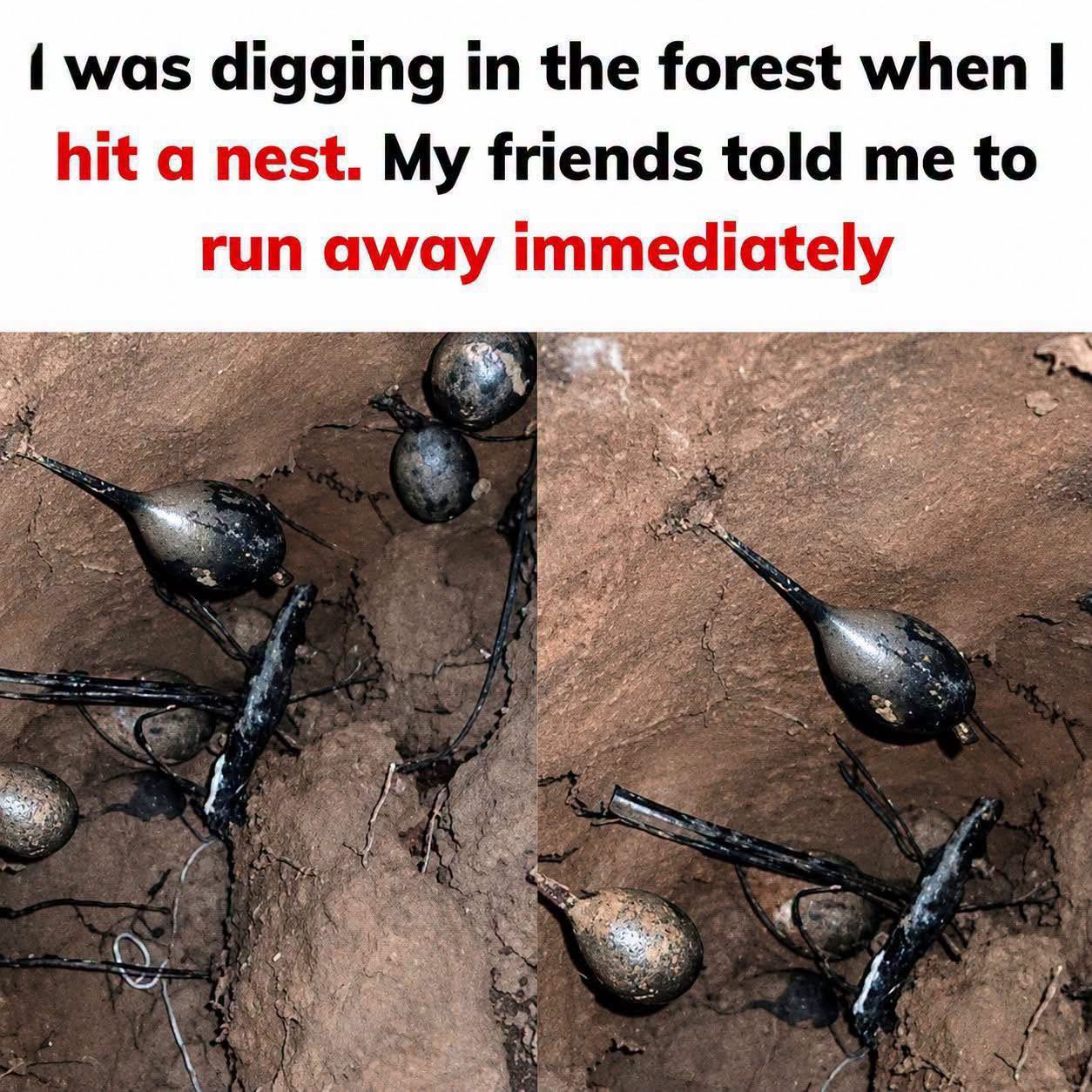
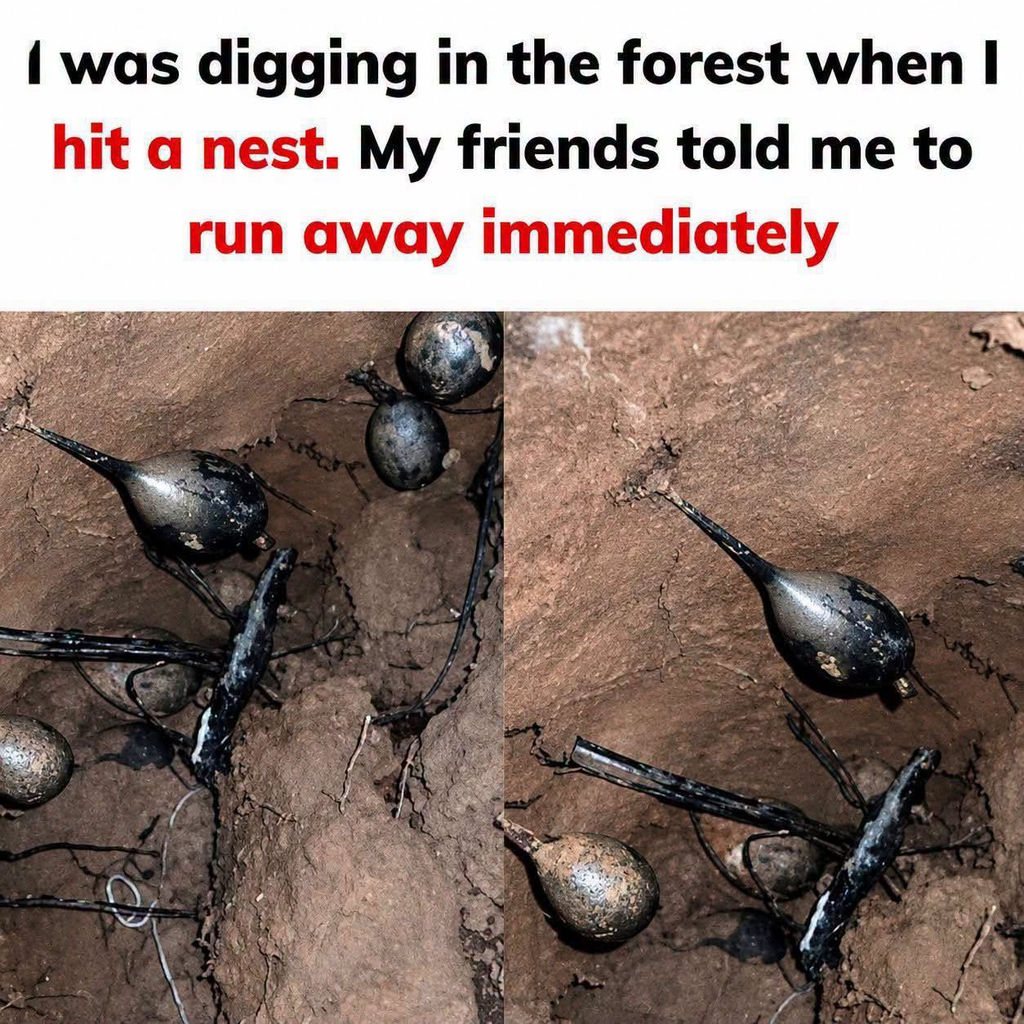
Your friends gave you very smart advice! The metallic tear-drop objects shown in the picture are not animal eggs or an insect nest—they are unexploded ordnance (UXO), specifically old military grenades (often referred to as stick grenades, mortar tail fins, or tear-drop hand grenades depending on the conflict region) or unexploded submunitions.
Why They Are Extremely Dangerous
- Unstable Explosives: Munitions that have been buried in soil for decades undergo corrosion. Moisture and chemical breakdown cause the primary explosives and detonators inside to become highly volatile and unpredictable.
- Tripwires and Fuzes: Many historical landmines and buried explosive caches were rigged with tripwires or sensitive contact fuzes. Notice the thin wires and metal rods protruding around the dirt in the photo.
- Friction Sensitivity: Simply disturbing the dirt around unexploded ordnance, hitting it with a shovel, or shifting its position can trigger a fatal explosion.
What to Do If You Find Something Similar
If you ever encounter buried metal objects that look like artillery shells, bombs, or grenades while digging:
- Stop Digging Immediately: Do not touch, shake, strike, or move the object or any attached wires.
- Retreat Safely: Slowly back away following the exact path you came in on.
- Mark the Area: From a safe distance, place a visible marker or ribbon so emergency crews can locate it, but do not stick anything into the ground near the site.
- Call Emergency Services: Report the discovery to local police or military bomb disposal units (EOD – Explosive Ordnance Disposal) right away, providing them with precise coordinates or location details.
Note on the Image: This specific image frequently circulates in clickbait social media posts with fictional captions. However, finding buried World War I/II or regional war remnants is a real occurrence in many forests and fields around the world.