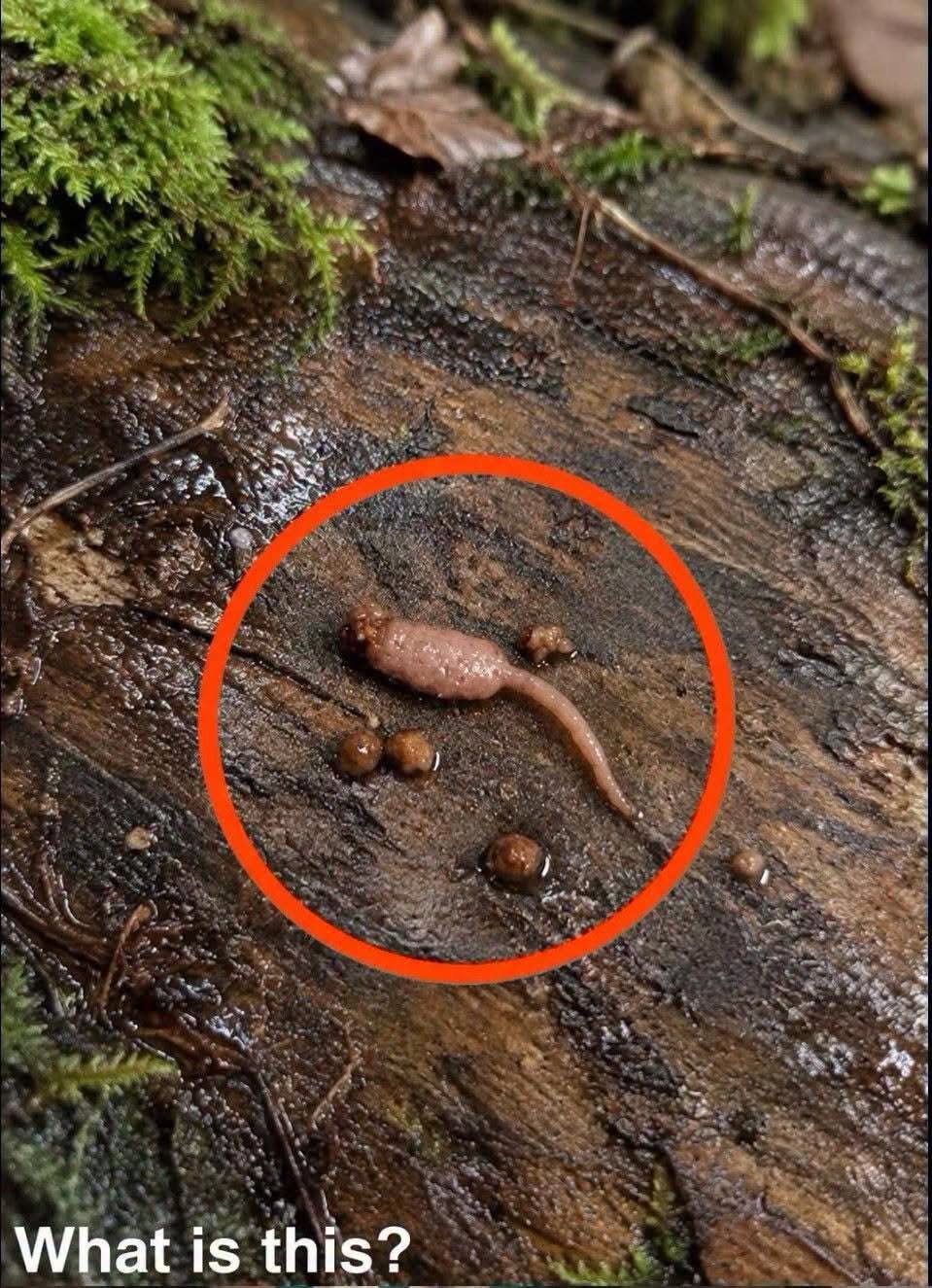
Despite the clickbait caption about finding it in ground beef, the creature resting on the wet bark/moss in the photo is actually a rat-tailed maggot—the aquatic larva of certain species of hoverflies (most commonly the drone fly, Eristalis tenax).
Key Features
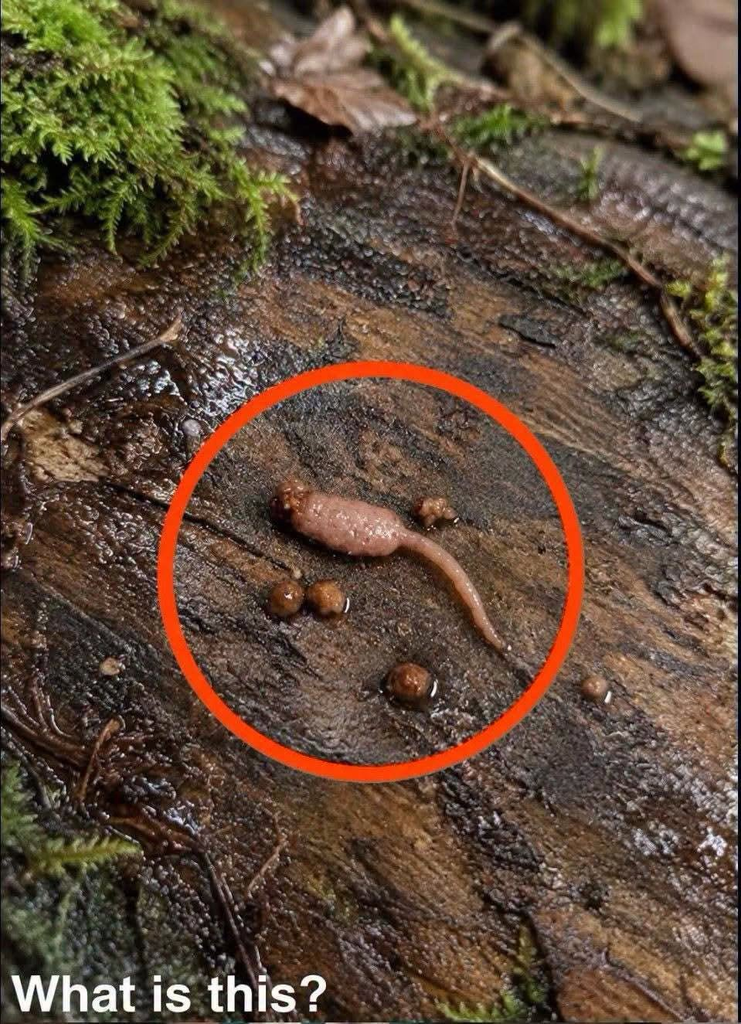
- The “Tail” (Snorkel): The long, tube-like extension sticking out from its rear is not a tail at all, but a telescopic breathing siphon or “snorkel”. It allows the larva to breathe atmospheric air while submerged in stagnant, low-oxygen water or wet organic mud.
- Cylindrical Body: The soft, plump body typically ranges from pale pink to grey or translucent brown with soft prolegs on the underside.
- Habitat: They live in stagnant freshwater, wet compost, rain barrels, or nutrient-rich mud where they feed on decaying organic matter.
What Does It Become?
When the rat-tailed maggot matures, it leaves the water to pupate in dry soil and metamorphoses into an adult drone fly (Eristalis tenax).
- Adult drone flies mimic the appearance of honeybees but are completely harmless (they do not sting or bite).
- They are highly valuable pollinators for garden plants and wild flowers.
Clickbait Context & Safety
Social media pages often attach shocking captions (such as finding it in cooked ground beef or store-bought meat) to unusual-looking animal images to generate clicks and shares.
In reality, rat-tailed maggots live in aquatic or muddy environments outdoors and are not human parasites.