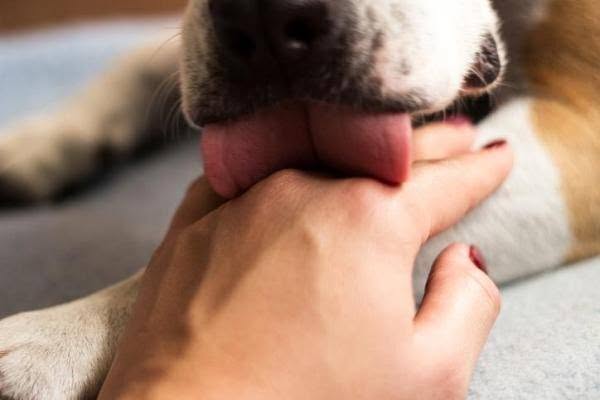
Sensationalized articles and posts about dog behavior generate high engagement on social media platforms. The shared image displays a close-up photo of a dog’s snout and tongue gently licking a person’s hand, accompanied by an intriguing headline: “When your dog licks your hands: What signals is he sending and why is it important to interpret them? It’s not just a simple habit…see more”.
While licking is indeed a key form of communication among canines, viral posts frequently exaggerate these “hidden signals” or imply hidden medical emergencies to create fear and force clicks. In the vast majority of cases, hand-licking is a completely natural behavior tied to affection, exploration, or bonding.
Here is the ethological breakdown of canine hand-licking, the mechanics behind pet clickbait, and practical guidelines to interpret your dog’s signals correctly:
1. The Problem: The “Hidden Secret” Clickbait Hook in Pet Content
Viral content centered on pets relies on predictable emotional and engagement mechanisms:
- Truncated Headlines (Clickbait Hooks): Using vague or incomplete statements (“It’s not just a simple habit… see more”) creates artificial curiosity, driving traffic to ad-heavy external websites.
- Sensationalizing Routine Behaviors: Framing normal, everyday habits (like a dog licking a hand) as mysterious warnings or health threats causes unnecessary anxiety for pet owners.
- Exploiting Emotional Bonds: The deep emotional bond people share with their pets guarantees high share rates and active comment sections full of personal anecdotes.
2. Explanation: Why Do Dogs Actually Lick Your Hands?
From a veterinary and ethological perspective, hand-licking serves several clear biological and social functions:
- Affection and Social Bonding: Licking triggers the release of endorphins and oxytocin in dogs, promoting feelings of calm and strengthening their social bond with human caregivers.
- Taste and Scent Information Gathering: Human skin retains natural salts, sweat, and subtle food residues. Using their tongue and vomeronasal organ (Jacobson’s organ), dogs gather olfactory and taste data about where you have been and what you have touched.
- Appeasement and Attention-Seeking: In canine body language, gentle licking can act as a calming signal to defuse tension, request attention, or express deference.
3. Advice & Steps: How to Respond to and Manage Licking
To maintain healthy, comfortable interactions with your dog, follow these practical steps:
1. Evaluate Overall Body Language
- Look at the full context: if your dog’s body is relaxed, ears are in a neutral position, and tail is wagging loosely, the licking is friendly and affectionate. If the body is tense or the dog is avoiding eye contact, it may be an appeasement signal responding to stress.
2. Gently Redirect Compulsive Licking
- If hand-licking becomes repetitive or unwelcome, avoid shouting or scolding. Simply pull your hand away calmly, ignore the behavior for a moment, or redirect your dog to an interactive toy or lick mat.
3. Maintain Basic Hygiene
- Always wash your hands after extended licking sessions. Avoid letting dogs lick your face, mouth, or open wounds to minimize the transfer of oral bacteria.
Disclaimer & Safety Guidelines
This article is provided for general educational, animal behavior literacy, and fact-checking purposes. Viral posts about domestic pets often dramatize routine behaviors. If your dog suddenly develops compulsive licking directed at themselves or household objects, consult a licensed veterinarian or certified animal behaviorist.