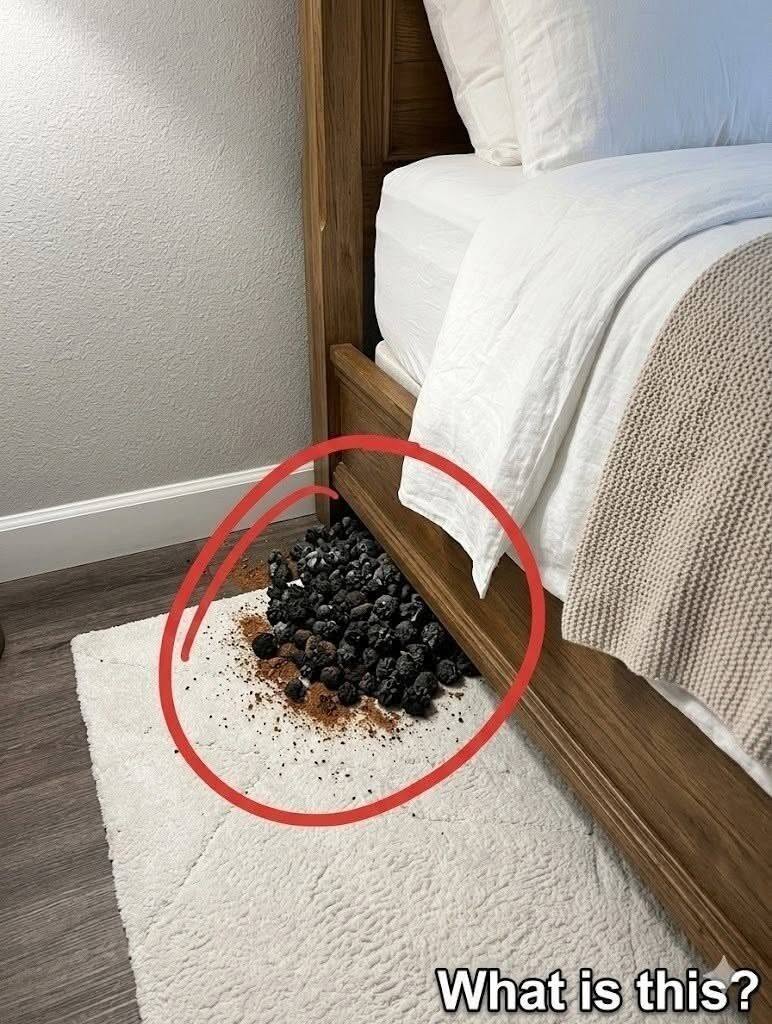
Viral posts featuring alarming photos of mysterious black piles or unknown debris discovered under a bed attract massive engagement on social media platforms. The shared image displays a heap of granular black pellets circled in red on a light rug beneath a wooden bed frame, accompanied by a sensationalized headline: “Woke up and saw THIS in my bedroom. Any idea what it is? The more I look, the more I get spooked out! Check the comments for the disturbing truth…”.
While such posts trigger immediate fear of unknown pests or biological threats, these viral images use sensationalism to reframe specific household wood damage—namely drywood termite droppings or AI-generated graphics—into urban horror stories.
Here is the breakdown of pest clickbait tactics, the entomological reality behind these piles, and practical steps to identify and handle real infestations:
1. The Problem: Exploiting Household Phobias for Clickbait
Viral content playing on fear and disgust relies on familiar engagement mechanics:
- The Red Circle of Alarm: Drawing a large red circle around an object draws immediate attention and creates a false sense of danger.
- Comment-Baiting (“Check the comments”): Urging users to check the comment section for the “disturbing truth” is a classic strategy to boost engagement metrics and manipulate platform algorithms.
- Intimate Threat Framing: Framing the discovery around waking up in one’s bedroom (“Woke up and saw THIS”) targets feelings of home vulnerability and personal security.
2. Explanation: What Are These Dark Piles in Reality?
From an entomological and structural perspective, accumulations of dark pellets under or near wooden structures have specific biological origins:
- Drywood Termite Frass (Fecal Pellets): When drywood termites (Cryptotermes) infest a wooden bed frame or timber beam, they carve out interior galleries and kick their waste out through tiny exit holes. These hard, six-sided fecal pellets (known as frass) fall directly beneath the infested area in neat piles.
- Powder Post Beetle or Wood Borer Damage: Other wood-destroying insects (such as powder post beetles) produce fine sawdust or tiny granular frass as their larvae feed inside structural wood.
- AI-Generated and Digital Exaggerations: Many viral graphics circulating online are edited or generated using artificial intelligence to make the piles look unusually large, dark, or creepy to maximize shares.
3. Advice & Steps: How to Handle Suspected Insect Frass
If you discover a pile of mysterious granules or debris beneath furniture in your home, follow these steps:
1. Inspect the Overhead Wooden Structure
- Look directly above the pile at the bed frame, headboard, or ceiling beam. Search for tiny, pin-sized “kick-out holes” where termites push frass out of the wood.
2. Check the Grain Texture and Shape
- Examine a few grains closely: drywood termite frass consists of uniform, hard, dry pellets with concave sides that do not crumble easily, unlike general dust or animal droppings.
3. Contact a Certified Pest Control Professional
- If termite or wood-borer frass is confirmed, avoid relying on ineffective surface bug sprays. Contact a licensed pest control professional to inspect the structural wood and apply targeted localized treatments.
Disclaimer & Safety Guidelines
This article is provided for general educational, housing literacy, and fact-checking purposes. Viral claims featuring “scary bedroom discoveries” frequently exaggerate routine wood-boring insect activity. For structural concerns or pest identification, always consult certified pest control professionals.