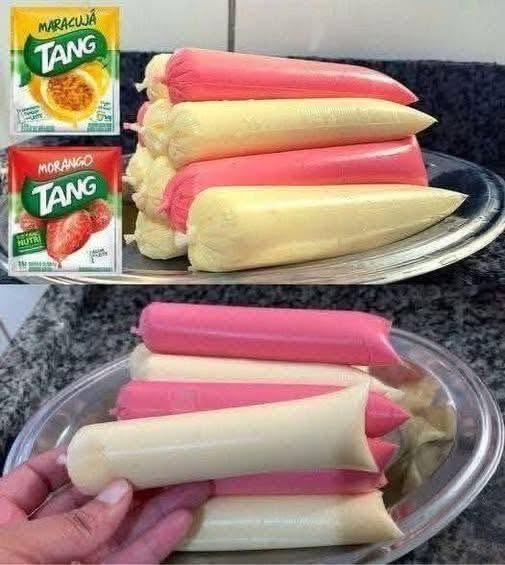
Viral recipe videos promoting homemade ice pops—known as sacolé, geladinho, or dudu in Brazil—made with powdered drink mix promise ultra-creamy, ice-cream-like results with minimal effort. The shared image depicts a stack of two-tone pink and yellow ice pop tubes alongside packets of Tang powdered drink mix (passion fruit and strawberry flavors), captioned: “Easy Ice Cream Recipe: 4 Ingredients and Very Creamy, Yields Well I sent it to whoever sent it Hi”.
While these popular budget treats made from condensed milk, heavy cream, and fruit powder are easy and fun to make, viral posts often exaggerate their texture while promoting ultra-processed ingredients high in artificial additives and refined sugars.
Here is the culinary breakdown of viral pouch ice pops, the food science behind the texture, and practical tips for making delicious, healthier homemade versions:
1. The Problem: The Promotion of Ultra-Processed Ingredients in Viral Hacks
Viral dessert recipes on Facebook and Pinterest rely on predictable engagement mechanics:
- Exaggerated Texture Claims: Describing liquid-frozen pouches as “ultra-creamy ice cream” overlooks the fact that static freezing produces a texture far closer to a hard sorbet or flavored ice than real churned ice cream.
- Overreliance on Flavored Powders: Using instant drink mixes (such as Tang) introduces high levels of artificial food dyes, synthetic flavorings, and acidity regulators (citric acid) to mimic real fruit.
- Engagement-Driven Captions (Clickbait Hooks): Promising massive yields from just four inexpensive ingredients encourages widespread sharing without evaluating the nutritional value of the recipe.
2. Explanation: What Does Food Chemistry Say About Pouch Ice Pops?
From a culinary and physical chemistry perspective, these freezer pops behave according to specific food science principles:
- Protein Thickening via Citric Acid: Powdered drink mixes contain significant amounts of citric acid. When mixed with condensed milk and cream, the acid lowers the pH and slightly curdles/thickens the dairy proteins, creating a deceptively thick mixture before freezing.
- Ice Crystal Formation: Without churn aeration (from an ice cream maker) or natural emulsifiers, static freezing in a home freezer allows large ice crystals to form. This results in a firm, icy bite once fully frozen rather than a smooth scoopable cream.
- High Sugar Content: Combining sweetened condensed milk with pre-sweetened drink powders results in a high glycemic load, far removed from the nutritional profile of real fruit pops.
3. Advice & Steps: How to Make Truly Creamy, All-Natural Ice Pops
To make rich, creamy sacolé or ice pops at home using wholesome ingredients, follow these simple steps:
1. Use Real Fruit and Whole Dairy
- Replace artificial drink powders with real fruit puree (passion fruit pulp, fresh strawberries, or mango). Blend fresh fruit with whole milk, heavy cream, or coconut milk for a natural fat base.
2. Add Natural Thickeners to Prevent Ice Crystals
- To achieve a smooth texture without an ice cream maker, blend half a ripe banana or a teaspoon of cornstarch (or guar gum) into your dairy mixture before freezing. The natural starches inhibit ice crystal growth.
3. Blend Thoroughly Before Pouched Freezing
- Run your mixture in a high-speed blender for 2 to 3 minutes to incorporate air bubbles. Use a funnel to fill the plastic pouches, leaving a small gap at the top before tying securely.
Disclaimer & Safety Guidelines
This article is provided for general educational, culinary literacy, and fact-checking purposes. Viral hacks using processed ingredients often distort the principles of traditional ice cream making. For a balanced diet, prioritize fresh fruit ingredients and monitor added sugar content in homemade frozen treats.