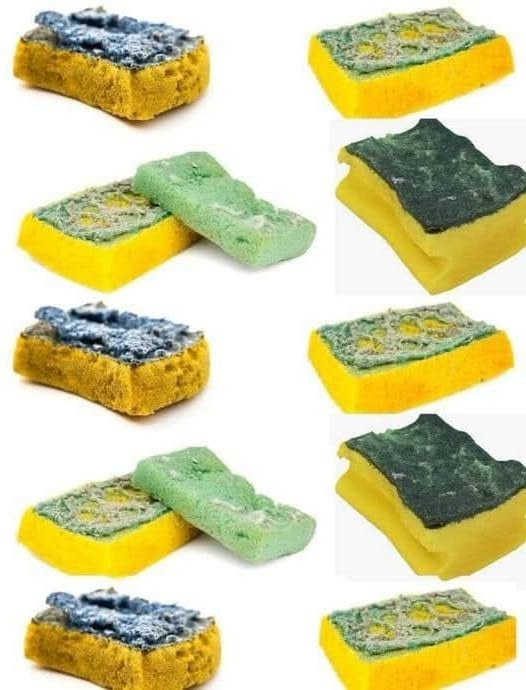
Viral posts promoting the endless reuse of common household items circulate heavily on social media platforms. The shared image displays a repeating grid of old, deteriorated yellow-and-green kitchen sponges, accompanied by a sensationalized title: “Old sponges, please don’t throw them away: “they are worth gold”… See more”.
While upcycling household items to reduce waste is a positive practice, reusing degraded kitchen sponges without hygiene precautions poses significant microbiological risks. Kitchen sponges are widely recognized by microbiologists as one of the single most bacteria-laden objects in the home.
Here is the microbiological breakdown of sponge reuse, the mechanics behind “zero-waste” clickbait, and practical guidelines to safely repurpose or discard old sponges:
1. The Problem: Sensationalized Recycling Hacks and Clickbait
Viral posts encouraging readers to hoard or continuously reuse old cleaning supplies rely on predictable engagement tactics:
- Value Hyperbole: Using dramatic phrases like “they are worth gold” creates curiosity around an everyday item usually considered garbage.
- Truncated Headlines (Clickbait Hooks): Combining a cut-off title with a “See more” button forces users to click through to external blogs filled with intrusive display advertising.
- Ignoring Sanitation Risks: Promoting the reuse of dirty sponges without clear hygiene boundaries exposes households to cross-contamination hazards.
2. Explanation: What Does Microbiology Say About Used Sponges?
From a health and sanitation perspective, damp kitchen sponges serve as ideal breeding grounds for bacteria:
- Bacterial Hotspots: Constant moisture, porous structure, and trapped food particles allow bacteria to thrive. A used kitchen sponge can host billions of bacterial cells per cubic centimeter, including potential pathogens like E. coli, Salmonella, and Staphylococcus.
- Ineffectiveness of Cleaning Disinfection: While microwaving or boiling sponges may temporarily reduce bacterial counts, studies show that resilient bacteria survive and rapidly recolonize the porous matrix.
- Separating Kitchen Sanitation from Heavy Cleaning: Reusing a worn-out sponge on dishes or food preparation surfaces is unsafe. However, giving an old sponge a “second life” for non-food tasks (such as cleaning car tires, gardening pots, or mud off shoes) is perfectly safe once repurposed appropriately.
3. Advice & Steps: How to Safely Manage and Repurpose Old Sponges
To maintain high household hygiene standards while minimizing waste, follow these best practices:
1. Replace Kitchen Sponges Regularly
- Replace your main dishwashing sponge every 1 to 2 weeks, or immediately if it begins to smell, crumble, or lose shape.
2. Clearly Mark and Segregate Repurposed Sponges
- When retiring a kitchen sponge to utility duty, cut off one corner with scissors. This visual marker ensures no one accidentally uses it back on dishes or countertops.
3. Switch to Washable or Compostable Alternatives
- To reduce waste safely, consider switching to machine-washable microfiber cloths (washable at 60°C/140°F), natural wooden dish brushes, or compostable loofah sponges.
Disclaimer & Safety Guidelines
This article is provided for general educational, household hygiene literacy, and fact-checking purposes. Viral hacks promoting endless reuse of cleaning supplies often overlook food safety and sanitation risks. To prevent foodborne illnesses, always adhere to strict sanitation guidelines when cleaning food preparation surfaces.