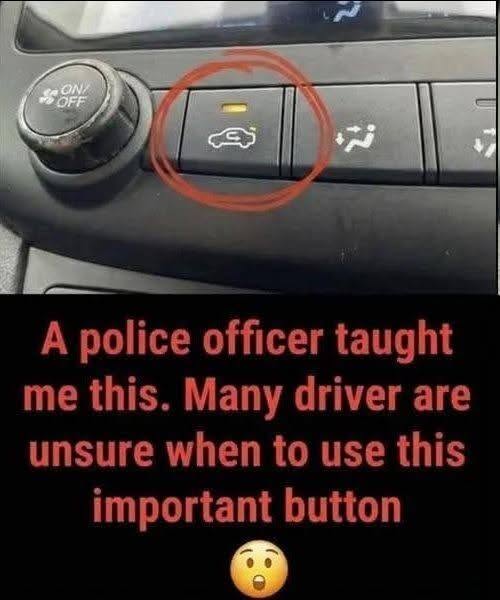
Automotive posts highlighting “hidden” dashboard features generate massive traffic on social media platforms. The shared image displays a close-up of a car’s climate control panel, highlighting the air recirculation button (depicted as a vehicle outline with a curved arrow inside), accompanied by a clickbait headline: “A police officer taught me this. Many driver are unsure when to use this important button. What the Air Recirculation Button Means for Your Driving Experience – Full article in the first com..nt”.
While the air recirculation button is an important climate control feature found in nearly every modern vehicle, viral posts frequently attach exaggerated claims or fake law enforcement backstories to entice drivers to click through to external sites.
Here is the technical breakdown of the air recirculation button, the mechanics of automotive clickbait, and practical guidelines for using it effectively while driving:
1. The Problem: Clickbait Sensationalism and “Secret Car Hacks”
Viral posts surrounding basic dashboard functions rely on well-established engagement-boosting tactics:
- Fake Authority Anchoring: Using phrases like “A police officer taught me this” attempts to grant artificial credibility to a mundane car tip by inventing a dramatic safety or law enforcement origin.
- Information Retention (Clickbait Hooks): Prompts telling users to check the first comment (“-Full article in the first com..nt”) serve primarily to artificially inflate comment section activity and drive traffic to third-party ad networks.
- Exaggerating Everyday Features: Framing standard climate settings as “hidden secrets” creates unnecessary alarm or curiosity among drivers who assume they are missing critical safety knowledge.
2. Explanation: How Does the Air Recirculation System Actually Work?
From a mechanical and HVAC perspective, the air recirculation button controls the source of the air flowing into your vehicle’s cabin:
- Fresh Air vs. Recirculation Mode: When deactivated, your car’s ventilation system draws air from outside, filters it, and blows it into the cabin. When activated, a duct flap closes, forcing the system to reuse the air already inside the vehicle.
- Faster Summer Cooling: In hot weather, recirculating cabin air allows your AC unit to cool already-chilled air rather than constantly cooling hot outdoor air. This lowers cabin temperatures much faster and reduces strain on the engine and fuel consumption.
- Blocking Pollutants and Odors: Recirculation prevents heavy traffic fumes, dust, pollen, and outdoor odors (such as skunk or industrial smells) from being pulled into the car.
3. Advice & Steps: When to Use (and Avoid) the Recirculation Button
To ensure maximum comfort, fuel efficiency, and safe driving visibility, follow these recommended practices:
1. Enable It in Traffic and Hot Summer Weather
- Turn recirculation ON when driving in heavy traffic, through tunnels, behind smoky exhaust pipes, or when starting your AC on extremely hot days to cool the interior quickly.
2. Disable It in Winter and Rain
- Turn recirculation OFF during cold or rainy weather. Trapping humid air from passengers’ breath inside the cabin causes rapid glass fogging on the windshield and side windows, severely impairing driving visibility.
3. Do Not Leave It On Continuously During Long Trips
- Keeping recirculation active for hours on long highway drives can lead to a gradual buildup of carbon dioxide ($CO_2$) and humidity in the cabin, which may cause drowsiness or headaches. Switch to fresh air periodically to refresh cabin air.
Disclaimer & Safety Guidelines
This article is provided for general educational, automotive literacy, and fact-checking purposes. Viral social media posts frequently exaggerate the basic functions of standard vehicle controls. For specific climate control operation and safety guidelines, always consult your official vehicle owner’s manual.